Look up the license
If your state requires one, get the number checked straight with the licensing board; the contractor’s own paperwork is not proof.

Learning how to avoid scams when hiring a metal building contractor mostly means checking things you can see for yourself: a lot you can walk onto, a plant where the steel is made, and a quote in writing that spells out what you are buying. Most metal building orders are filled as agreed. Where they are not, the story is usually familiar: the buyer handed over a big deposit on someone’s word, the details of the job were only ever discussed by phone, nobody could say who the installers were, and the paperwork never came. You can protect yourself without treating every seller as a suspect. A handful of checks will do it, and an honest company can get through them in a single afternoon. Below you will find those checks, what each one tells you, and the contract terms that make sure your money follows steel that actually shows up on your pad.
Short answer
Check, do not assume. Look up any license your state requires with the state board. Call the insurer to find out whether the insurance certificate is still valid. Get one written scope that names every door and the gauge of the steel. Link what you pay to delivery and finished installation instead of a big deposit up front, and ask for lien waivers when you make the last payment.
Call (252) 414-5105
Get a Free Quote
If your state requires one, get the number checked straight with the licensing board; the contractor’s own paperwork is not proof.
Phone the insurer or agent named on the certificate and ask whether the liability and workers’ compensation coverage is up to date.

One signed page should cover the building’s size, gauge and color, each door and window, how it is anchored, the drawings and the installation.
Keep the deposit small, schedule the balance for delivery and finished installation, and get the refund terms in writing.

Put the question to the county yourself: does the building need certification? A salesperson’s answer is not enough.
Get lien waivers when the last payment is made, and keep the drawings, permits, inspection reports and receipts in one place.

Begin by finding out exactly who you are dealing with. Ask for the legal name of the business, a street address and a phone number, and make sure the address is a real place. A manufacturer ought to have a plant that people can tour, and a dealer ought to have a lot with buildings standing on it. Some states require a contractor to hold a license for work of a certain size or kind. If yours does, get the license number and check it yourself with the licensing board.
Then ask to see a certificate of insurance that lists general liability and workers’ compensation. Call the insurer or the agent named on the certificate and confirm the coverage is current, because a certificate is only paper and the company that issued it is the only one that can vouch for it. Find out who will actually do the installation and whether those people are employees or subcontractors, and ask for installations completed lately in your county that you can drive by and look at.
None of this takes long. A company that goes through it every week will have the answers at hand, so any hesitation is worth noting.
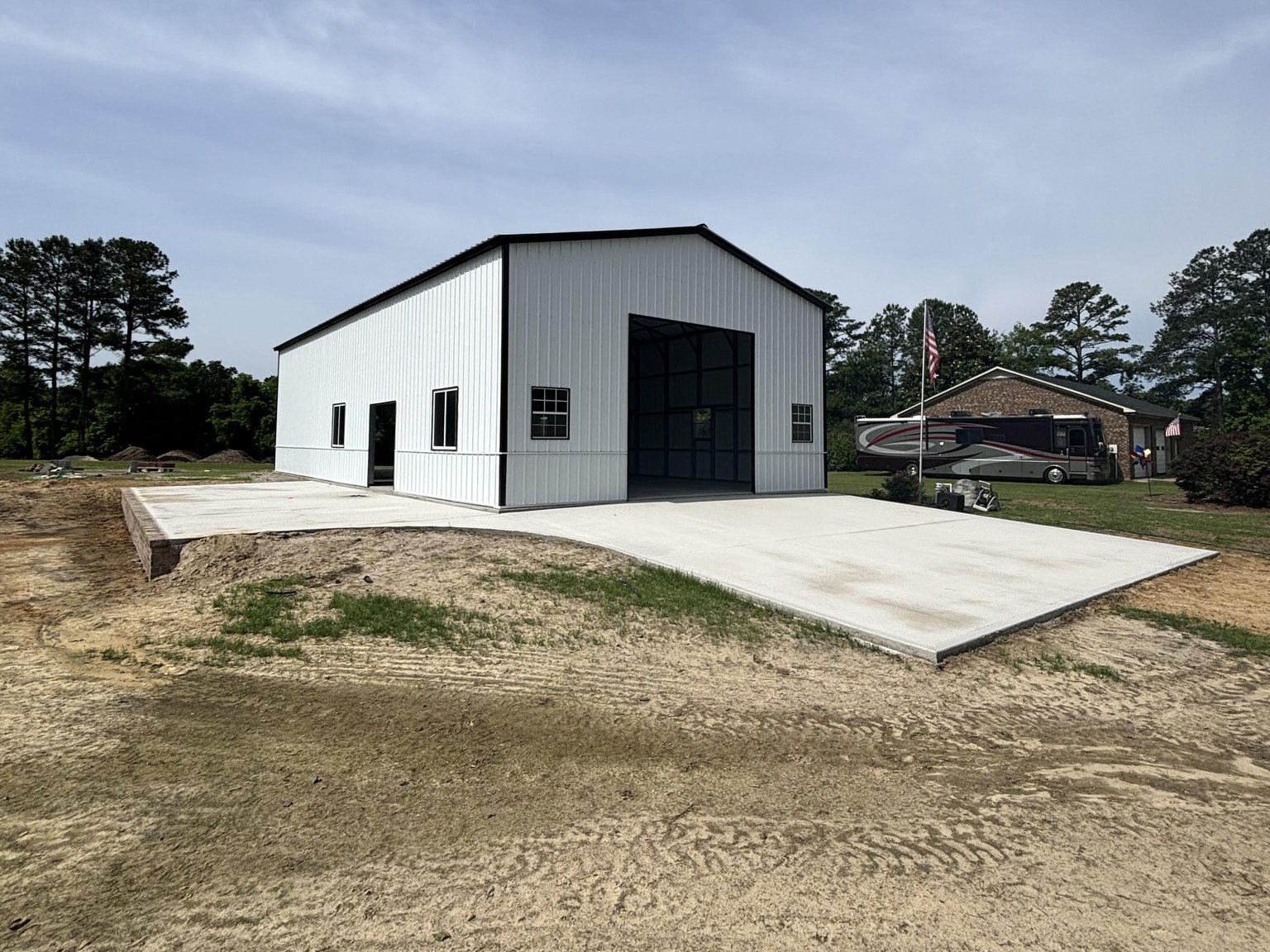
Write the scope so completely that a stranger could pick it up and put up the same building you are paying for. That covers the building itself: width, length and leg height, the roof style, the color and trim, and the gauge of both the framing and the panels. It also covers the openings and the foundation work: the size and position of each door and window, how the building will be anchored, and whether certified engineered drawings come with it. Add the delivery address and a line saying installation is included.
Money and timing belong in the agreement too. It should state a price that stays fixed for a set period, how change orders are handled and when delivery will happen. It should say how large the deposit is, what the deposit can be refunded against and when the balance is due. It should also say what becomes of the deal if the county refuses the permit, and both parties should sign the one document.
Nothing said out loud counts. If a salesperson makes a promise, ask for it to be written on the agreement and initialed. A written scope protects an honest contractor just as it protects you.

Link every payment to something you can see. A modest deposit that gets the building into fabrication is normal. Asking for the bulk of the price, or all of it, before any steel is delivered is one of the biggest red flags in this business. The balance should come due when the building has arrived and been fully installed, after you have walked around it and tested the doors, the trim and the anchors. Pay in a way that leaves a record.
When you make the final payment, ask the installer, and any subcontractor, for a lien waiver. It rules out a later claim on your property for work that has been paid for. If you are offered rent-to-own, read the complete agreement: the payment schedule, the terms for buying the building outright, what counts as default, and whether the building can be taken away.
ECOP offers rent-to-own on qualifying buildings, with no credit check. We make the panels ourselves and install the building without a separate contractor, which puts both the money and the responsibility in one company’s hands.

Some signs are plain. You are pushed to sign immediately, with the claim that tonight is the last night for the price. A deposit is requested in cash, or in some form that leaves no record. The company has no physical address, or the address proves to be only a mailbox. The license number you were given does not agree with what the licensing board has on file, or the insurer will not confirm the certificate.
Others are subtler: a scope that nobody will put in writing, a quote that leaves out the gauge, the doors or the installation, a seller who will not say who makes the steel or who will install it, or a delivery date that is pushed back again and again after you have paid. Be wary too of a contractor who swears no permit or drawings are ever needed in your county, while the inspections office says they are.
Any one of these may have an innocent explanation. Two or three together rarely do. Leave the heat out of it. Nobody is being accused; you are just holding off until the paperwork fits what you were promised.

Walk the finished building with the crew before they go. Look along the eave and the ridge to see that the lines are straight. Check that the panels overlap in a way that sheds the weather and that the screws sit snug with their washers undamaged. Open and close every door, make sure the trim is finished along every edge, and compare the anchors with what the drawings show.
Collect the engineered drawings if there are any, the signed scope, the permit and inspection records, and a receipt stamped paid. Take photographs of everything, the crew’s truck and the pad included. Where the county calls for a final inspection, hold back the last payment until the building passes, or until the contractor agrees in writing to fix whatever the inspector points out.
Keep all of it in one folder. Your insurer, your lender and a later buyer will each ask to see it, and if something goes wrong down the road, the folder settles who is answerable for each part.
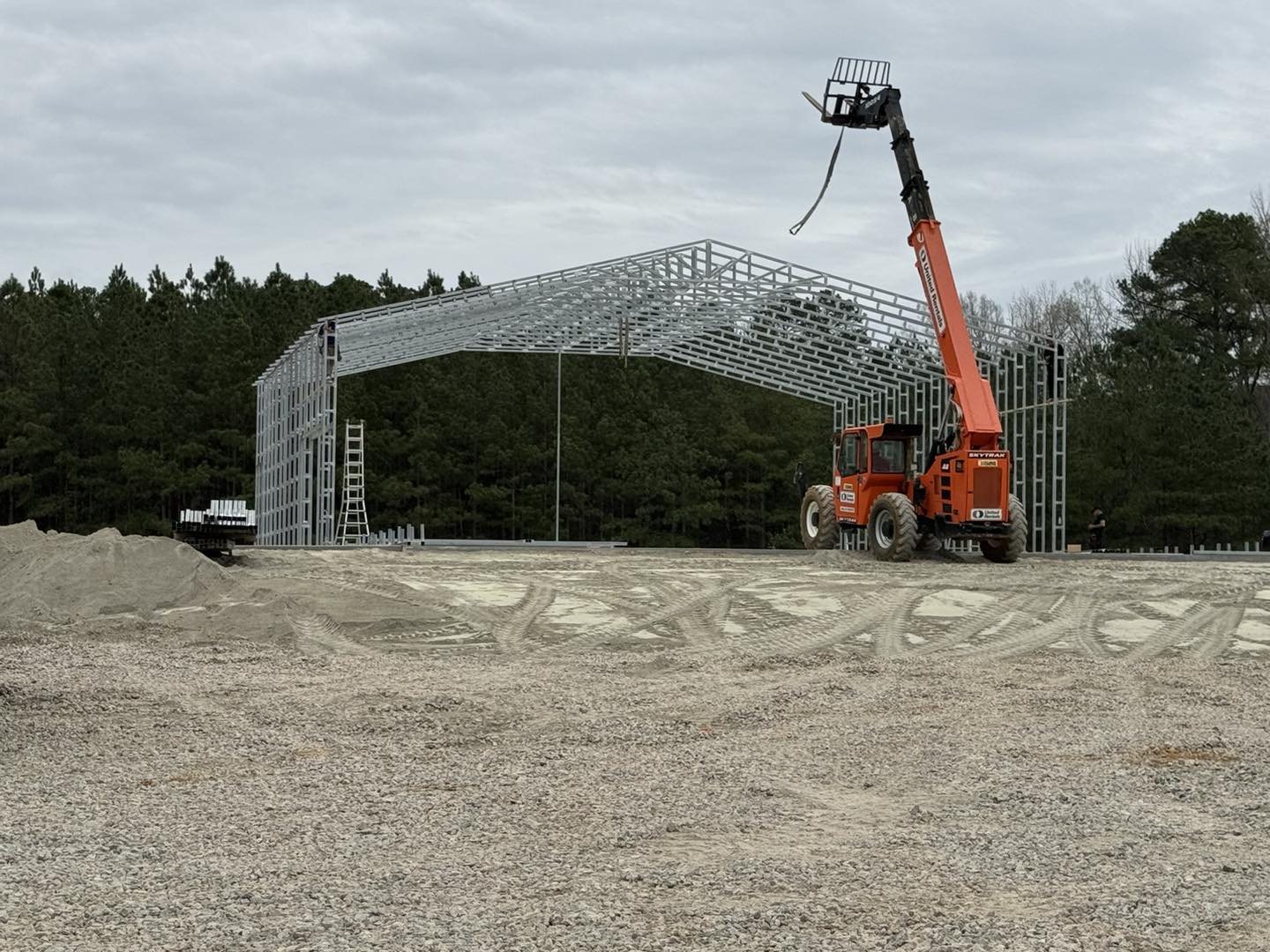
When a big storm moves through the Carolinas or Virginia, crews from other places soon start knocking on doors. Some of them do good work. Others take the deposit and vanish; by the time a panel should have shown up they are three states away. That is the best reason to buy from a company whose lot you can visit on foot and whose phone is answered by a real person.
A short run of questions separates the serious companies from the rest. Where, and by whom, is the steel manufactured? Who erects it? Will drawings certified for your county be part of the deal? Is the price in writing, with the scope spelled out to include delivery, installation and anchors? Is there a finished building nearby that you can go and look at?
None of this is peculiar to us. These are the questions we would put to a seller if we were the customer. Whichever company you choose, a plain answer to every one of them is a good sign.
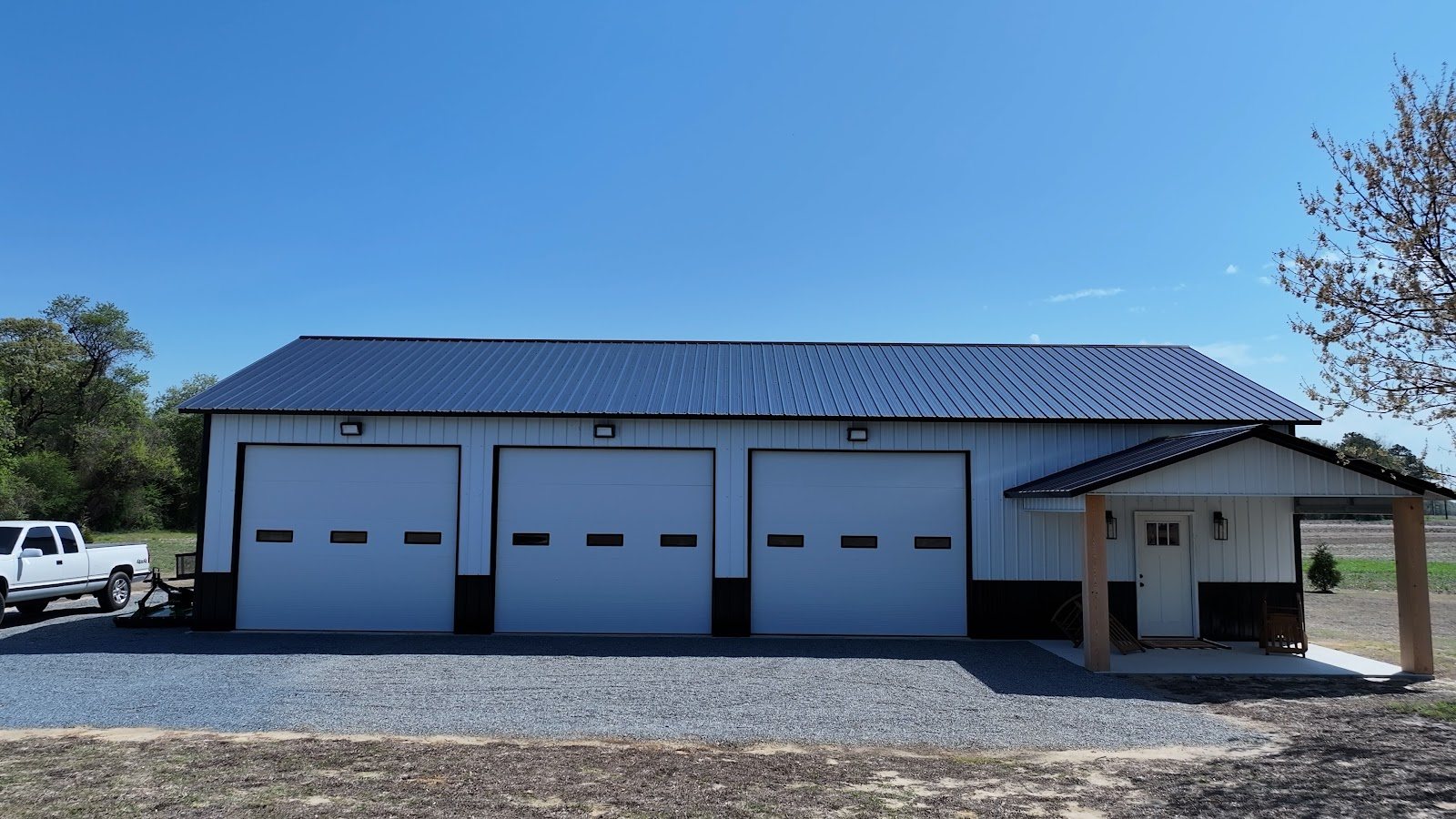
The best time to look at a site is just after a heavy rain, when you can see where the water stands. East of I-95, flat land and sandy loam over clay are the rule, and groundwater often lies just a few feet below the surface. The farmland is among the best in the country, and North Carolina leads every other state in sweet potatoes, most of them grown around here. That same ground repays some planning before concrete is poured.
Raise the pad instead of excavating. Compact the fill layer by layer, and give the surface a slope so rain runs off on its own. Sandy ground calls for the right anchors, which is one reason the anchoring method belongs in your written scope. Low ground can lie inside a flood zone shown on the maps, so see what the county’s flood map says about your lot before choosing where to build. Do all that and the building should stay dry on the inside for decades.
No single figure is right for every job, but the principle holds: a deposit should get fabrication started, and it should not pay for the entire job. Sellers who ask for nearly everything before the steel arrives are showing one of the warning signs seen most often. Ask for the balance to be due on delivery and finished installation, and get that in writing.
The rules depend on your state and on the size and kind of the work. If your job needs a license, get the license number and check it with the state licensing board itself, instead of accepting a printed card. When your state does not require a license for the work, the insurance and the written scope become more important still.
It is a signed statement in which the installer or a subcontractor confirms being paid and releases any right to make a claim on your property over that work. Ask for one when you make the final payment. Without it, a subcontractor who has not been paid may, in certain cases, make a claim on your land.
It takes out one link in the chain. If the same company forms the panels, hauls the building to you and puts it up, you know who is accountable and you can visit the plant. That is no substitute for checking, but it is easier to verify the license, the insurance and the written scope.
Find out for yourself. Phone the county inspections office, tell them the size of the building, what it will be used for and where it will stand, and ask what permits and certified engineered drawings apply. The answer varies from one jurisdiction to another and with how the building is used. A contractor who has it right will not object, and one who has it wrong has just spared you a building that gets rejected.
Yes. Buildings standing on a sales lot give you a chance to judge the panel gauge, the trim, the doors and the workmanship before you buy, and the lot itself shows that the company has a physical presence. Our 28 lots are spread over Southwest VA, Upstate SC and NC, and they keep these hours: Monday through Friday from 9am to 5pm, and Saturday from 9am to 1pm. You can see every location at /locations/.
When you are ready to hold an offer up against these checks, send us three things: the size you want, the county it will stand in and what you plan to keep inside. Our figure is based on today’s steel pricing, commits you to nothing, and comes with a straight word if a different size would serve you better.