Condensation and drips
Moist air meeting cold steel turns to water that drips. Decide on roof insulation, ventilation and a vapor barrier ahead of roof installation.

The usual mistake with a metal building is treating the bare shell as the finished product and dealing with the problems afterward. That is how owners end up with a dripping roof or a shop that roars in the rain. So what are the downsides of metal buildings? Some are real. Uninsulated panels sweat when the air is humid, rain on a bare roof is loud, a dark roof heats up through a Carolina summer, and the building remains a bare shell until your trades have finished the interior. Most of them can be solved, and the solution is cheaper when it is designed in from the start than when it is bolted on afterward. We go through each drawback honestly below, say which are structural and which are simply budget items, and point out what to ask before you order.
Put briefly, the main downsides are moisture dripping from uninsulated panels, noise when rain or hail hits the roof, heat gain in summer, an interior that stays bare until finishing trades arrive, fewer exterior looks to choose from than brick or wood offer, and occasional objections from lenders, insurers or neighborhood rules. Early planning, along with insulation, vapor control and ventilation, takes care of most of them.
Call (252) 414-5105
Get a Free Quote
Moist air meeting cold steel turns to water that drips. Decide on roof insulation, ventilation and a vapor barrier ahead of roof installation.

A bare roof is loud in a storm and hot under summer sun, and insulation beneath the panels fixes most of both.
The price excludes the slab, interior walls, plumbing and wiring. Budget the finish-out on its own line and line up your trades early.
Rust starts where panels are cut or scratched and where the base stays wet. Keep the base rail clear of soil and grass, and let water drain away from the pad.
Panels of 29-gauge steel are light by design, and a damaged one can be swapped out. Keep mowers and loader buckets away from them.
Homeowner association covenants, lenders and appraisers all treat metal buildings differently, so check before you order.

Moisture is the problem that most often takes new owners by surprise. After dark the steel cools fast. If warm, damp air indoors reaches a panel that has dropped below the dew point, beads of water gather under the roof and fall onto anything stored below. Humid air for most of the year, as in Eastern North Carolina and along the South Carolina coast, makes it worse. A different panel will not fix it; what works is keeping damp air off cold steel. Under the roof panels, a vapor barrier or radiant-type insulation helps, and so do ventilation at the ridge and eaves to keep air moving and a slab poured over a moisture barrier. Over bare gravel with no barrier, moisture rises out of the ground into the building throughout the summer. Decide about insulation before the roof is installed, because putting it in afterward means working overhead between purlins.

Rain on a bare steel roof sounds like a drum, and in July a dark roof pushes heat down into the room beneath it. Both complaints are fair for the unfinished shell, and a single layer answers both: insulation under the roof panels muffles rain noise a great deal and stops much of the radiant heat. A pale roof reflects more sunlight than a dark one, ridge vents let hot air out, and legs 12 feet tall instead of 9 keep the hottest air above head height. In a shop or garage, insulation plus a few vented openings is often enough. Anywhere people will spend real time, treat the shell the way you would treat the frame of a house, and work out insulation, air sealing and conditioning for the whole space with your own contractor. Think of the shell as the weather envelope and nothing more: the finished room comes later.

What you receive is the frame, the panels, the trim and the doors, anchored to your site. There is no floor, no wiring, no plumbing, no interior walls and no driveway in the package, and insulation is an optional add-on. A quote for a shell and the price of a finished wood-framed garage describe two different products, so comparing them head to head misleads. We manufacture, deliver and install the shell, and delivery and installation cost nothing when the site is within 100 miles of one of our lots. The interior trades are yours to hire. That keeps the shell simple. What it leaves you with is a second budget: an electrician, any insulation or finishing you choose, and a slab or footings. On the plus side, you control how well the finish is done and when. On the minus side, a shell usually goes up in days, whereas finishing the inside can take weeks or months. Get what the shell includes written down, so both sides know exactly where it ends.

Panel steel is galvanized and finished with a baked-on coating, and the framing tube is galvanized as well, so rust is far less of a worry than it was decades ago. Trouble spots are cut edges, scratches that go through the coating, overdriven fasteners, and the bottom of any panel that sits in puddles or in wet grass. Three habits take care of most of it: clear vegetation and soil away from the base rail, touch up any scratch, and put the building on a slab or gravel pad that drains away from it. Hail, mowers and tractor buckets are what dent panels. Panels of 29-gauge steel are thin by design, and a single damaged panel can be replaced on its own. Looks are a matter of taste. No one will mistake a plain rounded-roof carport for a barn, but a building with a vertical roof, wainscot, matching trim and a boxed eave looks at home beside a house. The 3D designer lets you see the result before you decide.
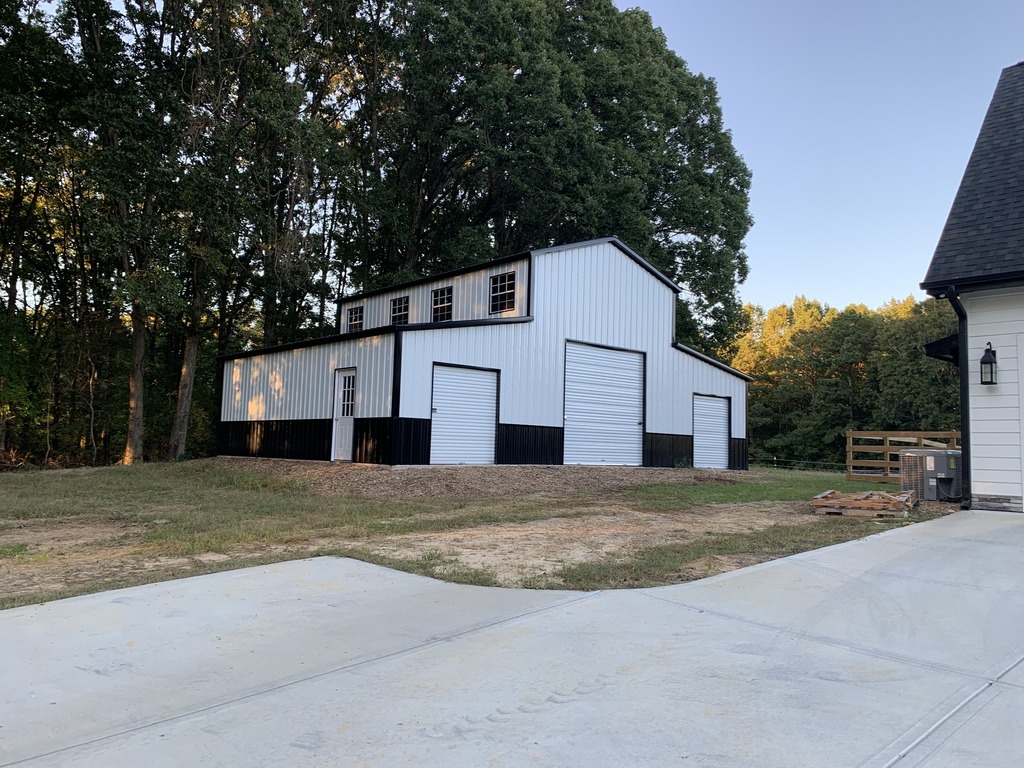
Sometimes, and the answer is local. Certain neighborhoods, and the homeowner associations that govern them, limit metal exteriors or dictate a look, so find out what the covenants say before ordering. Lenders and appraisers come next. Whether a lender will finance a metal building as a dwelling differs from lender to lender, and an appraiser may find few comparable sales of metal buildings nearby. A local lender can tell you early; do not guess. Insurance is usually available for steel buildings, and non-combustible construction counts in their favor with many insurers. They may ask about anchoring, wind certification and permit status. Put the permit, the certified drawings and the inspection records into one folder; those documents settle most of what a buyer, lender or insurer will ask. A detached garage, shop or barn on rural property seldom runs into these issues. If the building will be a primary residence, research them before you commit.

A steel building does well in a storm as long as it is properly anchored and kept in decent shape, and the upkeep is light. Ahead of hurricane season, make one trip around the structure. Snug up or replace any fasteners that have backed out. Pine needles and leaves should come off the roof and away from the foot of the walls. Every door should latch securely. The roll-up door is the one to watch, since left partly open it is how wind most often gets in.
With a storm on the way, clear the ground around the building of anything that could blow loose, shut and fasten each door, and move vehicles out from under trees. When it has passed, inspect the anchors, scan the roofline for trim that has lifted, and rinse away salt and debris. On the coast, ten minutes with the hose after a storm that blew in off the water is time well spent.
The rest of the year, upkeep is a few chores: wash the panels, keep mulch and plant growth away from the base rail, touch up scratches before rust sets in, and make sure the ground around the pad still slopes away.

In Eastern North Carolina, as anywhere, begin with the paperwork: any covenants on the lot, the permit, and a single folder holding the certified drawings and inspection records.
Old wooden tobacco barns still lean in fields along the back roads from Wilson out to the coast, tall and narrow because they were made for curing leaf. For about a century they served as the outbuildings of this region. Steel has taken over, on farms and in backyards, offering wide spans with no posts inside and roofs that shed a summer thunderstorm without complaint.
What people keep in them has changed more than the need for space has. One footprint might shelter a camper, a bay boat bound for the Pamlico, a side-by-side used in deer season, or the machinery that goes with a crop of sweet potatoes or peanuts. If you cannot settle on a size, take the longest thing you own, add space to walk around it, and then add one more bay. Building too small is the complaint we hear most.
Without insulation, any metal building in a humid climate can sweat now and then. Put insulation or a vapor barrier beneath the roof, add ventilation at the ridge and eaves, and pour the slab over a moisture barrier, and trouble is rare. Open carports, where air moves on every side, are the least affected.
On a bare roof with no insulation, a heavy storm can drown out conversation. Insulation under the panels turns the noise into a soft patter. In a shop that is rarely a deal-breaker. In an office, or anywhere people spend the day, build the insulation in from the start.
Heat moves through a bare steel roof faster than through a wood-shingled one, so an unfinished shell feels hotter on a summer afternoon. Insulation, a lighter roof color, ridge vents and taller legs close most of that gap, and an insulated, conditioned building holds its temperature like any other.
That depends on the neighborhood and on what the building is for. On acreage in the country or the suburbs, a well-sited garage or shop is generally viewed as an asset. Where covenants forbid metal exteriors, a building that was never approved can cause trouble when you sell, so check the rules first.
Steel with a galvanized finish does not rot, warp or feed termites, which are what usually go wrong with wooden outbuildings across the humid Southeast. What decides its lifespan is upkeep: keep the base dry, repair coating damage, and replace panels that get damaged. No single figure applies to every site, because conditions and care differ.
Tell us the size, your county and what you will keep inside. The quote reflects current steel pricing, carries no obligation, and comes with an honest note if another size would suit you better.