Check in spring and fall
Walk the perimeter, scan the roof from the eave and look inside. Watch for pooling water, debris, loose screws, cracked sealant and daylight showing at the laps.
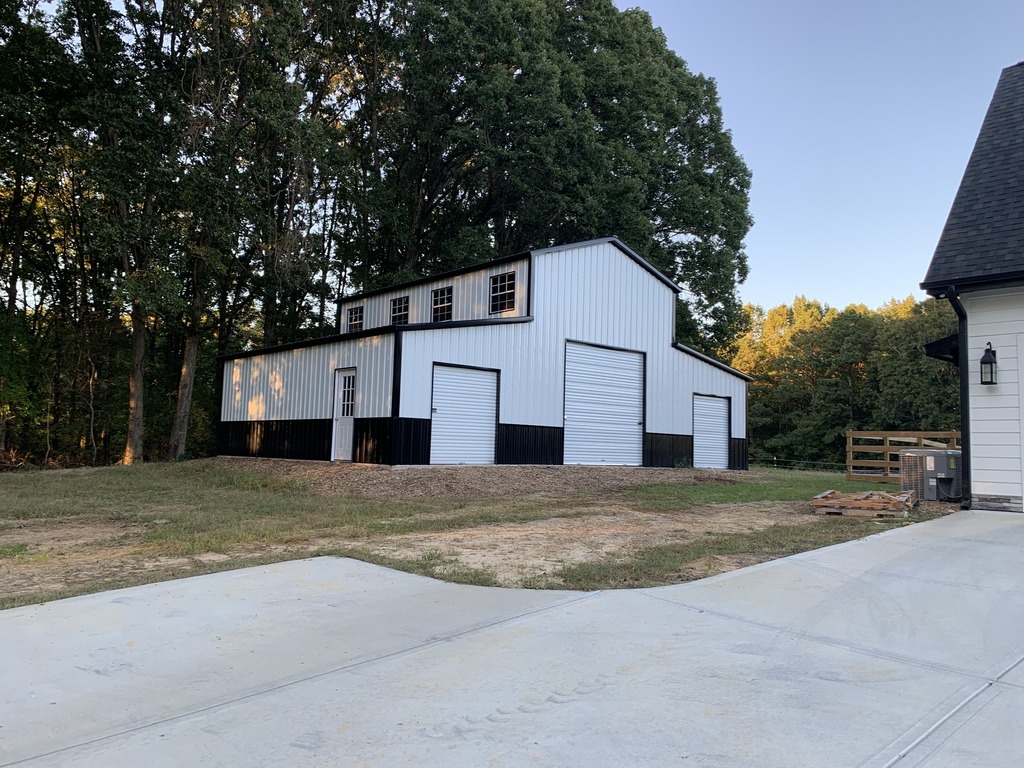
Between Wilson and the coast, old wooden tobacco barns still lean in the fields, and the steel buildings that replaced them ask far less of their owners. Far less is not nothing, though, and this guide answers the question of how often metal buildings need maintenance. Galvanized framing and painted steel panels need little attention next to wood, shingles or vinyl. Wash a building, keep water draining away from it and keep the fasteners tight, and it will look and work much the same decades from now. Let it fill up with pine needles, sit in a puddle at the foot of the wall and work loose at the screws, and the neglect will show.
Most of the work comes around with the seasons, and none of it is heavy. You wash the panels, walk the building, and check the roof once a storm has passed. The routine below suits garages, shops, barns and commercial buildings across the Carolinas and Virginia, and it explains what deserves extra attention close to the coast.
The quick answer
Plan on a light going-over about twice a year, plus a quick check after any major storm. In spring and fall, wash the panels, clear debris off the roof and out of the gutters, look over the fasteners and sealant, and keep vegetation and standing water away from the base. Close to the coast, rinse with fresh water more often to take off the salt.
Call (252) 414-5105
Get a Free Quote
Walk the perimeter, scan the roof from the eave and look inside. Watch for pooling water, debris, loose screws, cracked sealant and daylight showing at the laps.
Use low pressure, mild detergent and a soft brush, working from the top down. Skip solvents and abrasives, and stay off the roof.
As temperatures rise and fall, screws work loose and sealant dries out. Tighten and replace both before they leak, not afterward.
Rust starts where panels were trimmed in the field, around doors and other openings. Keep those edges clean and touch up bare steel.

A fresh-water rinse every few months washes off the spray that eats at thin paint and zinc along edges and screw heads.
Grading, gutters and downspouts should carry water away. Keep soil, mulch and chemicals off the panels and framing.

Spring follows winter’s ice and fall comes just ahead of it, which makes them the natural times to look a building over. Start at ground level and walk all the way around. You are looking for damaged panels near the base, soil or mulch heaped against the steel, and anywhere rainwater collects. Then climb a ladder to the eave and look across the roof: debris lying in the valleys and along the ridge, screw heads that have worked out or lost their washers, and sealant at the trim and around penetrations that has cracked or come away.
Go inside next. Daylight showing at the laps or the ridge, water marks on the framing and condensation dripping onto stored items all count as findings, and every door and opener should be operated. Keep a dated note of what turns up and deal with small items straight away. A loose screw takes two minutes to tighten in spring and may be a leak by fall.

Inland buildings need one wash a year. Near the coast, add a few rinses with plain water through the year as well.
For the wash itself, a garden hose is enough, or a pressure washer turned down low and kept well back. Use mild detergent, and for stubborn dirt, mildew or the green film that creeps across a shaded north wall in humid summers, add a soft brush on a long pole. Start at the top and work down so dirty water does not streak panels you have already cleaned.
Some things do harm. Harsh solvents and abrasive pads are out, and so is a high-pressure nozzle held close to the panel, because at that range it can take the paint film off and leave the steel open to rust. Keep off the roof too. The ribs are strong, but the flat sections between them dent, and water collects in a dent. Do not forget the underside of the eaves and the trim, where wasp nests and dirt build up out of sight. On a humid day, let the building dry before you close the doors.

Look first at the fasteners and the sealant. Over a year the panels expand and shrink through hundreds of hot and cold cycles. That movement weathers the washers under the screw heads and nudges the screws loose, and one loose screw gives water a way in at a spot where the panel was pierced. Sealant around the trim, ridge caps, vents and pipes dries out and cracks with age. When it does, cut it out and apply fresh sealant in its place rather than smearing it over the old.
Cut edges come next. Wherever a panel was trimmed in the field, beside a door or at another opening, the paint film stops, and rust can start there. Keep those edges clean, and touch up any bare steel you see.
Moving parts take their share of wear: on a roll-up door, the springs, tracks and bottom seals all wear with use. At ground level, anchors can work loose if the slab edge cracks or the soil holding a ground anchor washes away. None of this costs much when it is caught early, and all of it costs plenty when ignored.

The routine bends a little depending on where the building stands.
Along the coast, salt is the issue. Spray lands on the panels and works into crevices, and corrosion speeds up wherever the paint or the zinc is thin. Wash the salt off with fresh water every few months, give cut edges and screw heads particular attention, and do not let sand or plants pile up around the base, since both keep moisture pressed against the steel.
In the Piedmont, humidity is the trouble. Mildew grows on shaded walls, and an uninsulated shell collects condensation inside. Good ventilation and a yearly wash handle most of that, and a vapor barrier beneath the slab does more than any amount of scrubbing.
In the mountains and Southwest Virginia, snow and ice matter most. Make sure the roof sheds snow cleanly, clear drifts that have piled against a taller wall or a parapet, and look for screws that ice has loosened as it slid off the panels. Wherever the building stands, a named storm means the same thing: walk around it the day after.

A maintenance list works only if it is short enough to follow, so here is how the jobs fall across the calendar.
In spring and fall, wash the panels, clear the roof and gutters of debris, check the screws and sealant, test the doors, walk the base looking for pooled water or soil against the steel, and look inside for daylight or stains. After a storm, look over the roof for lifted panels or debris damage, and check the doors for harm. Once a year, touch up cut edges where bare steel shows, lubricate the door hardware, and make sure gutters and downspouts carry water well away from the foundation. That matters most on clay, which swells when wet. Every few years, put fresh sealant around the trim and penetrations, and tighten or replace any screw that has lost its washer.
Road salt, fertilizer and chemicals do not belong on bare framing, and they should never be stacked against the panels. A building made from 29-gauge panels and galvanized framing, as ours are, and set on a pad that drains properly is built to need very little more than this.

Well anchored and kept up, a steel building rides out storms in good shape, and keeping it that way asks for very little. Before the season starts, take a walk around it. Tighten or replace any screws that have loosened, take leaves and pine needles off the roof and away from the foot of the walls, and make sure every door latches firmly. Doors deserve special care: the most frequent way for wind to enter is a roll-up door that has been left partly open.
With a storm in the forecast, put anything that could blow around well away from the building, shut and secure all the doors, and leave vehicles clear of trees. Once it has passed, look at the anchors, scan the roofline for trim that has lifted, and hose off salt and debris. Near the coast, after a storm that blew in off the water, that rinse takes about ten minutes and is worth doing.
The yearly list stays short. Wash the panels, keep mulch and plants away from the base rail, deal with scratches before rust sets in, and slope the ground beside the pad so that it drains away from the building.
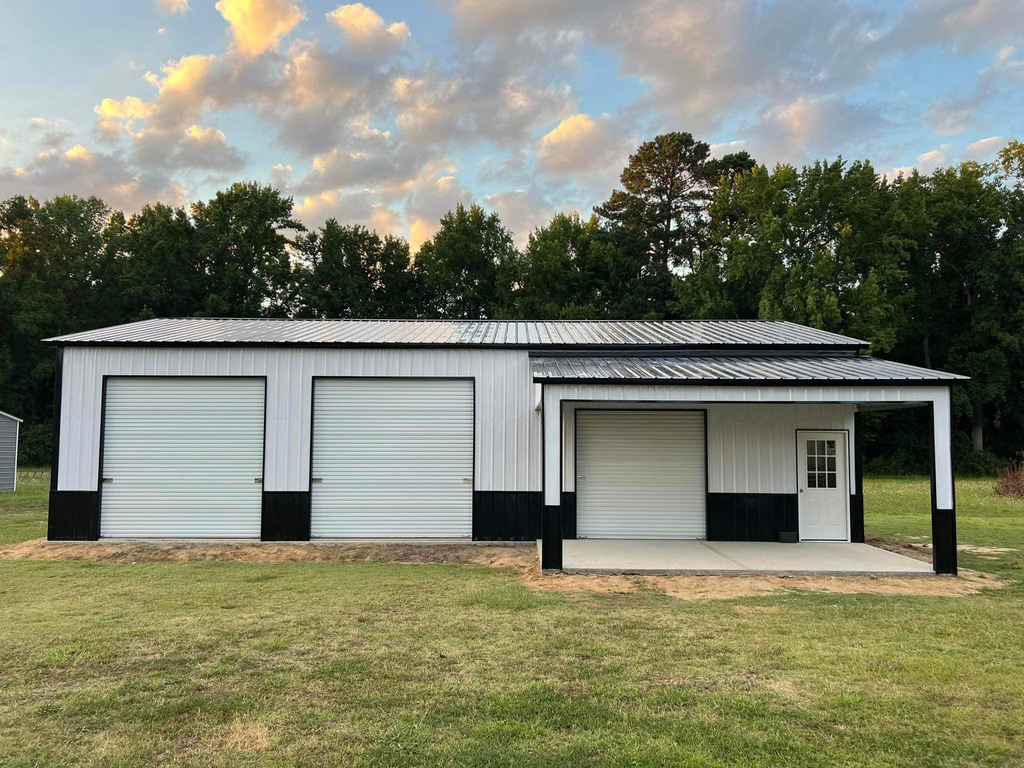
Before anything else, deal with the paperwork. Ask your county what a building like yours requires, and look at where the flood map places your lot. Water that sits at the base is one of the things that make a steel building age early, so drainage is worth settling before the pad is poured.
The tall, narrow tobacco barns that cured leaf for a century were the outbuildings of this region. On farms and in backyards, steel has taken over from them, with wide clear spans, no posts in the middle and a roof that sheds a summer thunderstorm without complaint. What goes underneath has changed more than the need for cover. One floor can hold a camper, a bay boat for use on the Pamlico, a side-by-side used in deer season, or the machinery for a crop of sweet potatoes or peanuts.
When you cannot settle on a size, measure the longest thing you own, add space to walk around it, and then add one more bay. Building too small is the commonest regret we hear about.
Not routinely. What ages is the sealant at the trim, ridge caps and pipe penetrations, which dries out over a span of years. If it cracks or lifts, and your spring or fall check will show whether it has, cut the old sealant out and apply fresh instead of layering over the top.
Plan on two checks a year and an extra one after a major storm. Stand at the eave with binoculars or go up a ladder. Because panels grow and shrink with the temperature, screws gradually back out and their washers wear. Tighten whichever are loose, and replace a screw once its washer is gone.
Not much, since galvanized framing and painted panels resist it well. Rust starts where the coating is broken, at cut edges, scratches and screw heads, and it moves faster in salt air. Keep those places clean, touch up any bare steel, and rinse a coastal building with fresh water.
Yes, as long as the pressure stays low and you stand back from the wall. Mild detergent and a soft brush will deal with stubborn spots. A high-pressure jet up close can take the paint off and drive water in under the laps. Work downward from the top, and keep your weight off the roof.
Go around the building the following day. Look for panels that have lifted or gone missing, bent trim, marks from flying debris, a door pushed off its track, and water getting in at the laps or the ridge. Examine the ground at the base too, in case it has washed out around the anchors. Secure any loose fasteners before it rains again.
It can, slowly. Tools kept inside may rust and the framing may pick up stains. The cause is warm, humid air meeting cold panels. Three measures cut it down: ventilation, insulation fitted against the roof panels, and a vapor barrier beneath the slab. If you mean to finish the interior, settle all three in the plan before that work starts.
Tell us the size, the county and what the building will hold, and we will price it from current steel costs. Asking puts you under no obligation, and if a different size would serve you better, we will say so.