Change the inputs
Size, gauge, certification, openings, site work and interior finish-out add up to the quote. Steel follows the market, so there is little slack in it.

Learning how to negotiate the best price on a metal building starts with a decision, not a request for money off. A steel building is priced from the going rate for coil, so there is less room to bargain over the raw material than most buyers hope for. The savings come earlier, when you settle the size, the framing gauge, the certification, the doors, the site work and whatever you plan to do inside. A buyer who walks in with a firm spec, the county’s answer on permits and bids that can be compared like for like usually gets further than one who just asks for a lower number. Below we explain how a metal building gets priced, which items can move, which cannot and how to set quotes side by side.
The short answer
To negotiate well, control what drives the price instead of asking for a discount. Fix the size and leg height first. Choose a gauge and certification that match what your county requires. Keep the doors and windows to the ones you will really use. Prepare the site yourself. Then compare bids only when each one covers delivery, installation and anchoring for exactly the same building.
Call (252) 414-5105
Get a Free Quote
Size, gauge, certification, openings, site work and interior finish-out add up to the quote. Steel follows the market, so there is little slack in it.
Extra bays reuse the same frame design. A wider or taller building needs new engineering, so every added foot costs more.
Doors, windows and trim packages can be cut back freely. Leave the gauge, the anchoring and the loads the building is designed for as they are.
Hand every company one list: dimensions, loads, openings and what is included. If the lists differ, a lower bid just describes a different building.
Local contractors price grading, gravel and a slab competitively. Let the building’s anchor layout decide how the pad is poured, not the other way around.
Learn what the deposit secures, how long that protection lasts, when the rest falls due and what happens to your money if the permit is refused. Insist on seeing it written down.

A steel building quote is built from six parts. First is size: the width, length and leg height of the building fix how much steel is rolled and how much framing is cut. Second is the gauge of the framing. Tube in 12-gauge is priced above 14-gauge, and the reason to pick it is wind exposure or span, not appearance. Third is certification, since drawings engineered and stamped for your county are extra engineering work. Fourth are the openings, because each garage door, walk door and window needs its own framing, trim and hanging. Fifth is the site and foundation, which you normally pay somebody else to prepare. Sixth is finishing the interior, which the steel quote does not include at all. Behind all six stands the steel market, and coil is a commodity whose price keeps moving. For that reason ECOP quotes from current steel prices, usually within 24 hours, and does not print a price list that would be wrong in a few weeks.

Separate what you want from what you must have, and negotiate only the first group. If you need more floor area, length is the cheapest way to get it: a longer building adds bays to the same frame design, while extra width or leg height means new engineering. Look at the doors next. A two-car building does not strictly need two garage doors, so keep only the ones you will use. Wainscot, colored trim and additional windows should each justify their price. A carport or partly enclosed barn can have open sides, provided security is not an issue. And where your county does not demand certified drawings for a building of your size and use, ask yourself whether you would still want them for resale or insurance. What cannot be traded away is the framing gauge your site calls for, the anchoring an inspector will check and the design loads it was engineered to carry. Cut those to shave the quote and you will pay for it later as repairs.
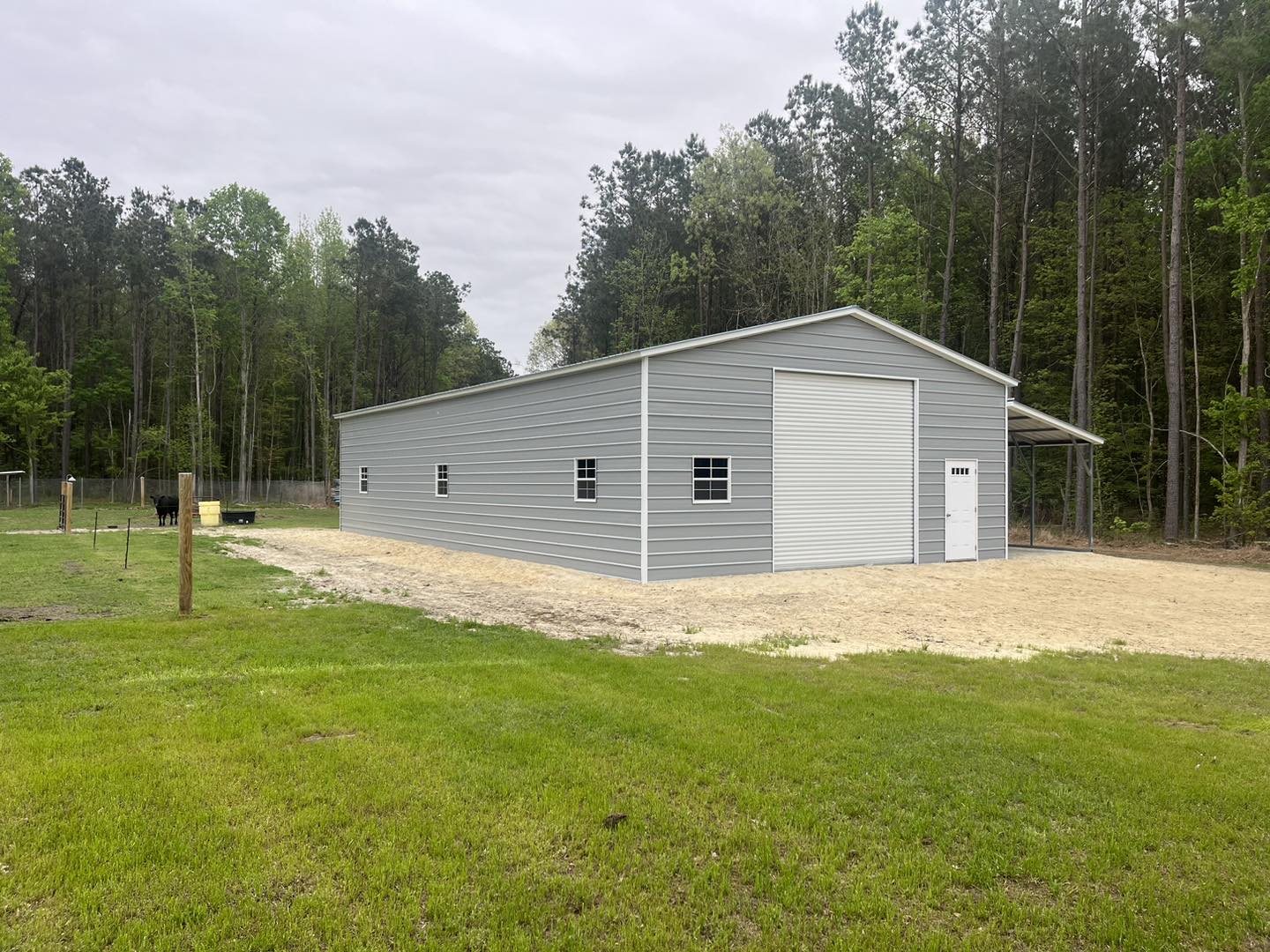
The only fair comparison is between identical buildings, so start by putting your requirements on a single page. List the width, length and leg height, the roof style, the gauge of both the panels and the framing, the wind and snow loads the building must be designed for, and a plain yes or no on certification. Add every opening with its size and the wall it sits in, the colors you want and the type of anchoring your foundation calls for. Give that page to each company. Ask them to confirm in writing which of delivery, installation and anchoring their price includes and which it leaves out. Be wary of a figure that skips installation, quotes a lighter frame or assumes ground anchors on a slab: that is a different building, not a lower price for the one you described. Collect two more answers from every bidder. One is how long it takes from deposit to installation, stated as a range, along with what happens if the schedule slips. The other is how large the deposit is and when the rest falls due. Once the quotes match in scope, any difference left usually comes down to how far the crew must travel, when it is free and how current its steel pricing is.

Yes. Of all the ways a homeowner can cut the cost of a building, this is the biggest. A crew needs a pad it can reach, on ground that has been leveled and cleared. When the delivery truck cannot get in, or the crew has to cope with a slope, the extra hours and equipment appear on your bill or the delivery slips to a later date. You can hire the grading, gravel and concrete slab yourself and shop the prices around, and those prices follow local dirt and concrete rates, not anything the building company sets. One tip: get the anchor layout and slab dimensions before you speak to the concrete contractor, so the pad is poured to match and never has to be altered afterward. The second lever is distance. ECOP charges nothing for delivery or installation at sites within 100 miles of one of its lots, so a lot near your site, rather than the closest large town, takes that line off the bill altogether.

By the time you are ready to hand over a deposit, the questions left are about terms. Get the final quote on paper, with each option itemized and each exclusion spelled out. Check which design loads it assumes and whether engineered drawings come with it, bearing in mind that the county should already have told you what certification it wants. Then find out exactly what your money secures: does it hold today’s price if steel moves, and for how long? Learn when the remainder falls due and whether payment waits until the installation is finished. You will also want the lead time given as a range, and the cancellation terms if the permit is denied. Where cash is tight, rent-to-own is worth raising. ECOP offers it on qualifying buildings with no credit check, and it can bring a larger size within reach without altering the price. Last of all, ask to see the company’s license and its insurance certificate, and file the quote, drawings and permit together in one folder.
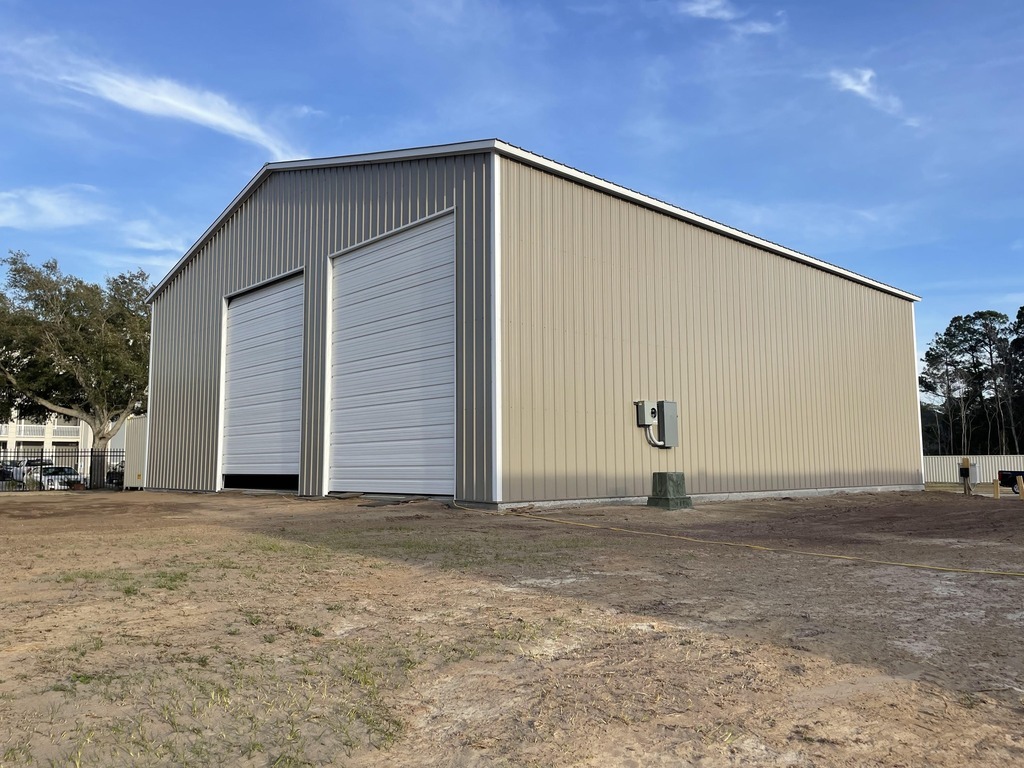
Two metal buildings with identical footprints can come back at different prices, and the cause is usually the site. Wind speed is the first factor: your county’s design wind speed governs the framing and the anchors, decides whether certified drawings are needed, and rises as you approach the coast. Ground is the second. Level, well-drained land asks little of you, while low land may need fill, regrading or a raised pad.
The rest is choice: roof style, leg height, the number and size of the doors, insulation, a slab or no slab. Doors and wall height add to the total faster than extra square footage does. Steel also changes price through the year, so what we send is based on current costs, not on a table that would be wrong a month from now.
The most useful preparation costs nothing. Write down the street address, the approximate size and what the building will hold. With that in hand a real number comes back quickly, and bids from different companies become much easier to compare.

Few places on the East Coast see as much tropical weather as Eastern North Carolina. Floyd (1999), Isabel (2003), Irene (2011), Matthew (2016), Florence (2018) and Dorian (2019) are all recent enough to remember. A few arrived mostly as wind, but most arrived as water, and people here took one lesson from them: a building is only as good as the way it is held down and the ground under it.
So we ask about the site before colors come up. Design wind speeds are lower along I-95 and higher toward the coast, flood zones run along every river and sound, and your county sets the certification an inspector will ask for. Those three points shape the framing, anchors and drawings, which makes them the last place to save money. Tell us where the building will stand and we will price what fits that spot.
Very little, because steel is priced at market and a quote follows the coil price. What you can change is the spec: lower the leg height, reduce the openings, skip certification if your county permits it, and take on the site work yourself. A clear spec and bids you can compare will get you further than asking for a percentage off.
Only when both cover the same scope. Compare how each building is anchored, whether certified drawings are included, the gauge of the framing and the loads it is designed for, and whether the price covers delivery and installation. If one bid omits installation or specifies a lighter frame, it describes a different product, and the lower number does not mean a lower price.
Make it longer. A longer building simply repeats the frame design in more bays, whereas going wider or taller means re-engineering it. If growth is likely, either buy the extra length at the start or ask whether the building could be extended later along the same foundation.
Seldom by much. The price of steel moves with the commodity market, not with the calendar, so waiting for a season rarely changes the quote. What can improve in slower months is crew availability and lead time, which is worth knowing if you want the building installed soon.
It changes the way you pay, but the building stays exactly the same. On qualifying buildings ECOP offers rent-to-own without a credit check. Before choosing it, ask for the whole payment schedule in writing and set it beside the cost of paying in full.
Check two things first: what the deposit actually locks, and what becomes of it if the county refuses the permit. A common approach is to wait for the county’s written answer on the permit and on certification, and only then pay the deposit, so that the locked price and the approval arrive together.
Name the width and length you are weighing, the county and what has to fit inside, and we will come back with a price based on current steel costs. There is no obligation in asking, and if a different size would work out better for you, you will hear that from us.