One party answers for it
The same company forms the steel, delivers it and erects it, so responsibility is never divided.
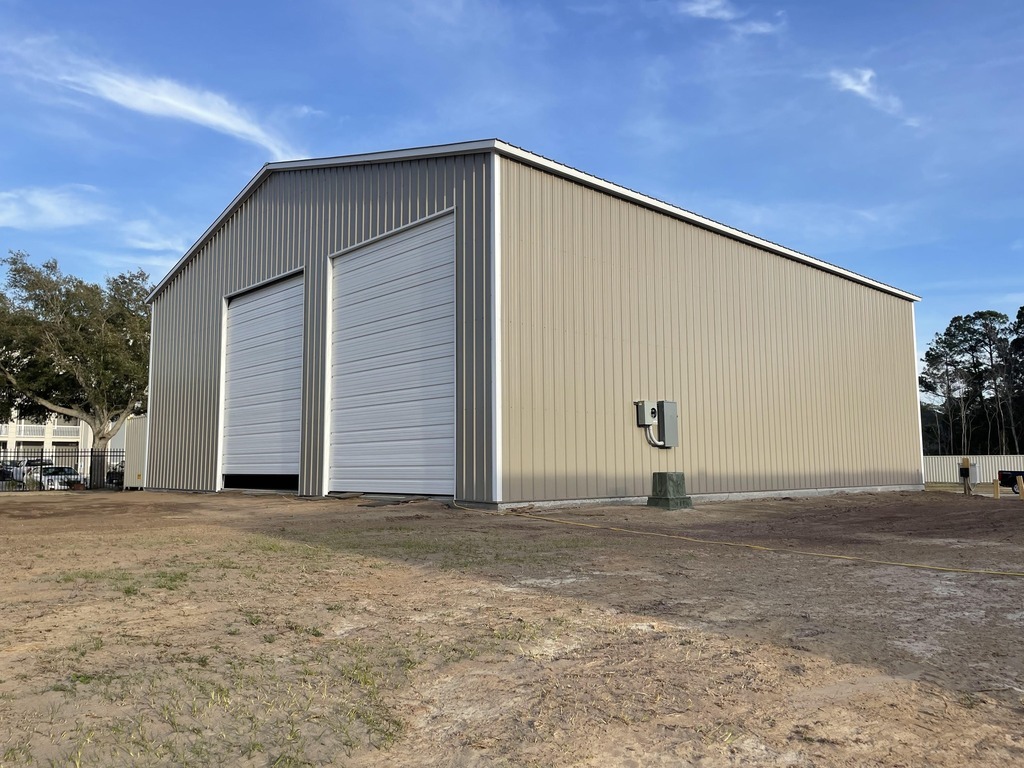
Before you choose among metal building contractors, decide how many companies you want involved. With some, one firm sells the steel and a different one puts it up. With us, the company that manufactures the steel also builds the building. That means a single invoice and a single place to call if something goes wrong, and nobody to point at the other party.
Call (252) 414-5105
Get a Free Quote
The same company forms the steel, delivers it and erects it, so responsibility is never divided.

Any of our 28 lots can supply the building with delivery and installation included.

Certified engineering is available wherever the plan reviewer requires it.
We choose anchors for the ground you actually have, not from a standard spec.

Our Farmville roll-forming plant supplies NC, SC, VA and GA.

Structure is our job. For everything else we will name who you need.

The usual cause of a bad metal building job is not weak steel but a handoff. One firm sells the kit, another crew erects it, and the trouble lands in the space between them: panels that arrive short, anchors that suit the wrong soil, a slab an inch out, and nobody who owns the fix. When a single company forms the steel, delivers it and erects it, there is no one to pass the problem to. That is the practical reason to buy supply-and-erect instead of sourcing the pieces separately.

Our scope is the structure. That means the steel, its delivery, the anchoring and the erection, along with certified engineered drawings in counties that call for them. Concrete, utilities, grading and interior finishing are outside it. Some contractors say they cover everything and then subcontract most of the work. We prefer to say exactly where our job ends, so you know who to arrange for the rest, and we will gladly explain what shape your slab should be in before you pour.

Put the same building on two different sites and you have two different jobs. Flat ground and a clear route for the truck is the easy case. A slope, soft soil, a narrow approach or a long walk from the road to the pad each change the work. Asking about the site before we price is better than finding out on delivery day. When a site needs preparation, we will tell you what it needs and roughly what that will cost, even though the work is not ours.

Rules differ widely between counties in Virginia, Georgia and the Carolinas, and coastal counties add wind-load requirements that inland ones do not. When your building department asks for them, we provide certified engineered drawings of the structure. Pulling the permit and booking inspections is up to you or your general contractor, and we will tell you plainly what your jurisdiction tends to expect, so plan review holds no surprises.
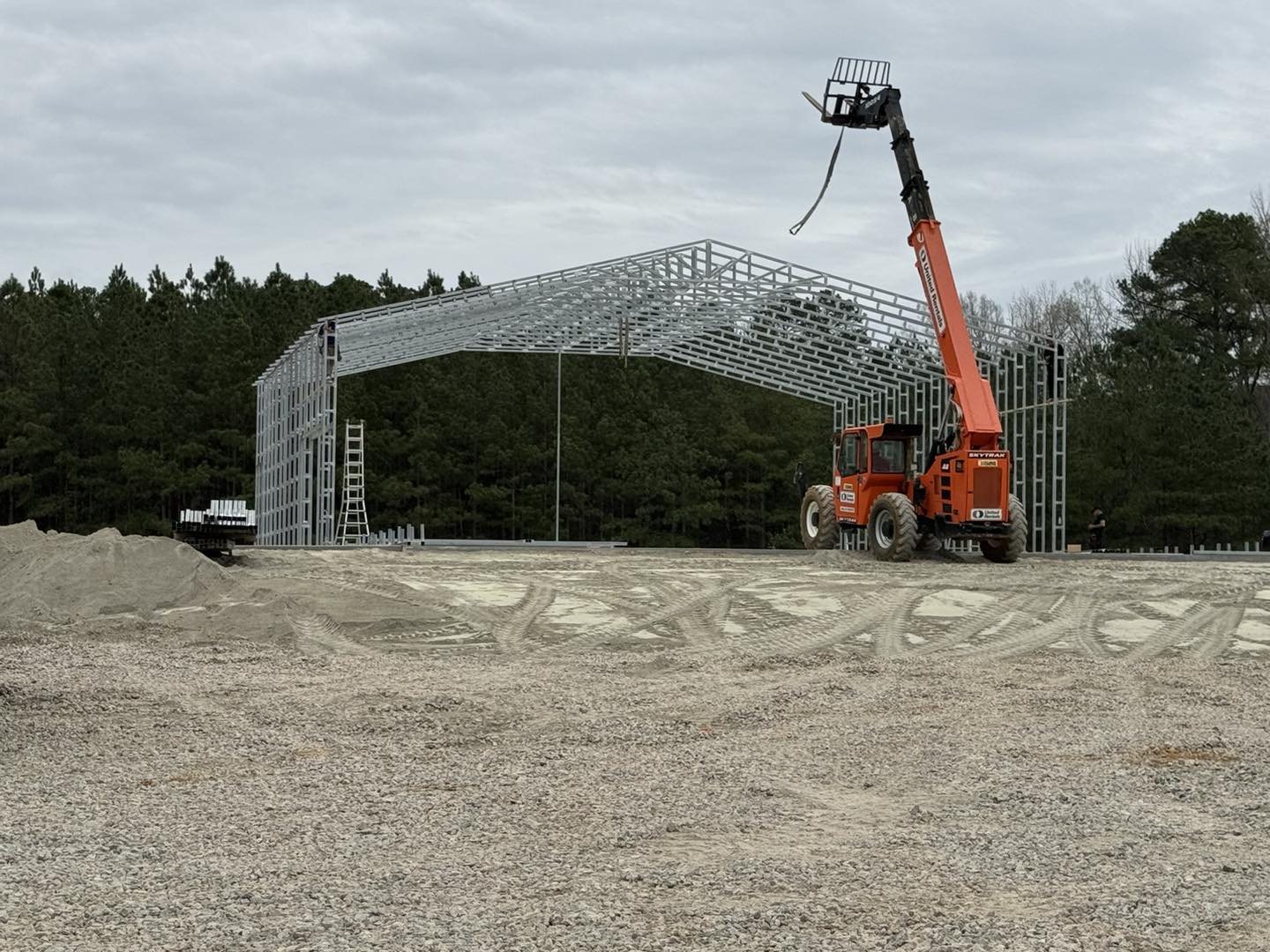
Big storms across the Carolinas and Virginia bring out-of-town crews who go from house to house offering work. Some are good. Others take a deposit and disappear before the steel is ever delivered. That is why it pays to buy from a firm whose yard you can visit and whose phone is answered by a person.
Ask where the steel is formed, and by whom. Ask whose crew erects it. Ask if the drawings carry certification for your county. Ask for the price on paper, with the scope stating that delivery, installation and anchors are in it. Ask where you can see a finished building close by.
None of this is special to us. It is what we would ask in your position, and a plain answer to every question is a good sign, whoever ends up with the order.

Start with the paperwork, before any steel is ordered. The county you build in decides what certification its inspector expects, flood zones trace every river and sound in this part of the state, and design wind speeds climb as you travel from I-95 toward the coast. So pull up the flood map for your parcel, and ask the building department which permit and which drawings a building like yours needs.
We build for the place we live, and the weather explains why. Eastern North Carolina has taken more tropical systems than nearly any other stretch of the East Coast, and people here can name them: Floyd (1999), Isabel (2003), Irene (2011), Matthew (2016), Florence (2018) and Dorian (2019). Wind was the story in some and water in most. What stuck is that how well a building is anchored, and what it stands on, decide how it fares, so site questions come first when you call us, ahead of color choices.
We do both. The panels are roll-formed at our own plant, and we deliver them, anchor the building and erect it. Within 100 miles of any of our 28 lots in NC, SC and VA the erection costs nothing. If you or your own crew would rather do the erecting, you can buy the materials alone.
It depends on what is going up. A carport or many farm structures can sit on level ground held by rebar anchors, while an enclosed garage, a shop or anything that needs a permit generally calls for a slab. If you plan to pour one, call us first. We will send the slab dimensions and the anchor-bolt layout, so the concrete is made to fit the building instead of the other way around.
That falls to you or your general contractor, who also books the inspections. If your building department wants certified engineered drawings of the structure, we supply them, and we can tell you what your county usually asks for. Because requirements differ so much from one county to the next, check locally before you order.
A standard carport or garage often goes up in a single day, and larger commercial structures take more time. The steel is rarely what sets the schedule: permitting, site preparation and the time a slab needs to cure usually do. We will give you a firm date for the materials so the rest can be planned around it.
Frequently, though a slope changes the job and sometimes the price. Soil type, access and the distance materials must be carried all play a part as well. Describe the site when you ask for a quote and not afterward, because it is the largest single cause of surprises on delivery day.
Send us the size, the county and what the building will store, and we will price it from current steel costs. You are under no obligation, and if a different size would work better, we will say so.