Freight costs extra
A kit arrives on a flatbed, so add the haul to your address and a person to unload it.

Is a metal building kit cheaper than hiring a contractor? You can find out with two written quotes laid side by side, because a kit quote ends when the truck arrives and an installed quote ends at a finished building. To make them comparable, add back everything the kit leaves out: freight, helpers, a lift for the roof, rivet tools and drills, an anchoring plan, your own weekends and any panel you spoil while you learn. A small carport on a level pad, put up with a friend, can come out ahead as a kit. An enclosed garage, or any building the county inspects, usually does not. What follows shows how to make the comparison fairly.
The short answer
A kit comes out cheaper than a contractor only if its total stays lower once freight, tools, helpers, a lift, anchoring and your own labor are counted in. Where the maker delivers and installs without charging for either, as ECOP does for sites within 100 miles of one of its lots, the finished building often costs less.
Call (252) 414-5105
Get a Free Quote
A kit arrives on a flatbed, so add the haul to your address and a person to unload it.

Plan for impact drivers, shears, a rivet tool, ladders or scaffolding, plus a lift for the roof panels if the legs are tall.
Plan on two or three people for several days. Nobody can set panels alone when the wind is up.
Anchors have to suit your foundation and, if the building is inspected, match the stamped drawings.
Budget a little for a panel that bends, a part that goes missing and a rained-out weekend.

ECOP delivers and installs for no charge anywhere inside 100 miles of one of its lots, and the building goes up in days.

What a kit quote pays for is steel: the frame, the panels, trim and fasteners, and in most cases the doors. After that, nearly everything falls to you. Freight is the first item, since the steel for a whole building arrives on a flatbed and needs someone to take it off. Equipment is next. Setting roof panels on 12-foot legs takes a ladder, scaffold or lift, and you will also need impact drivers, metal shears, rivet tools and the anchors your foundation requires.
Then come the people. On the days the building goes up you need two or three able helpers, and even then a panel can bend in a gust before a screw holds it. A mistake early in the job can cost the most: when the first bay is out of square, each bay after it inherits the error. So give every item above its own line on the quote, with a real figure next to it, before you set the kit against any other option.
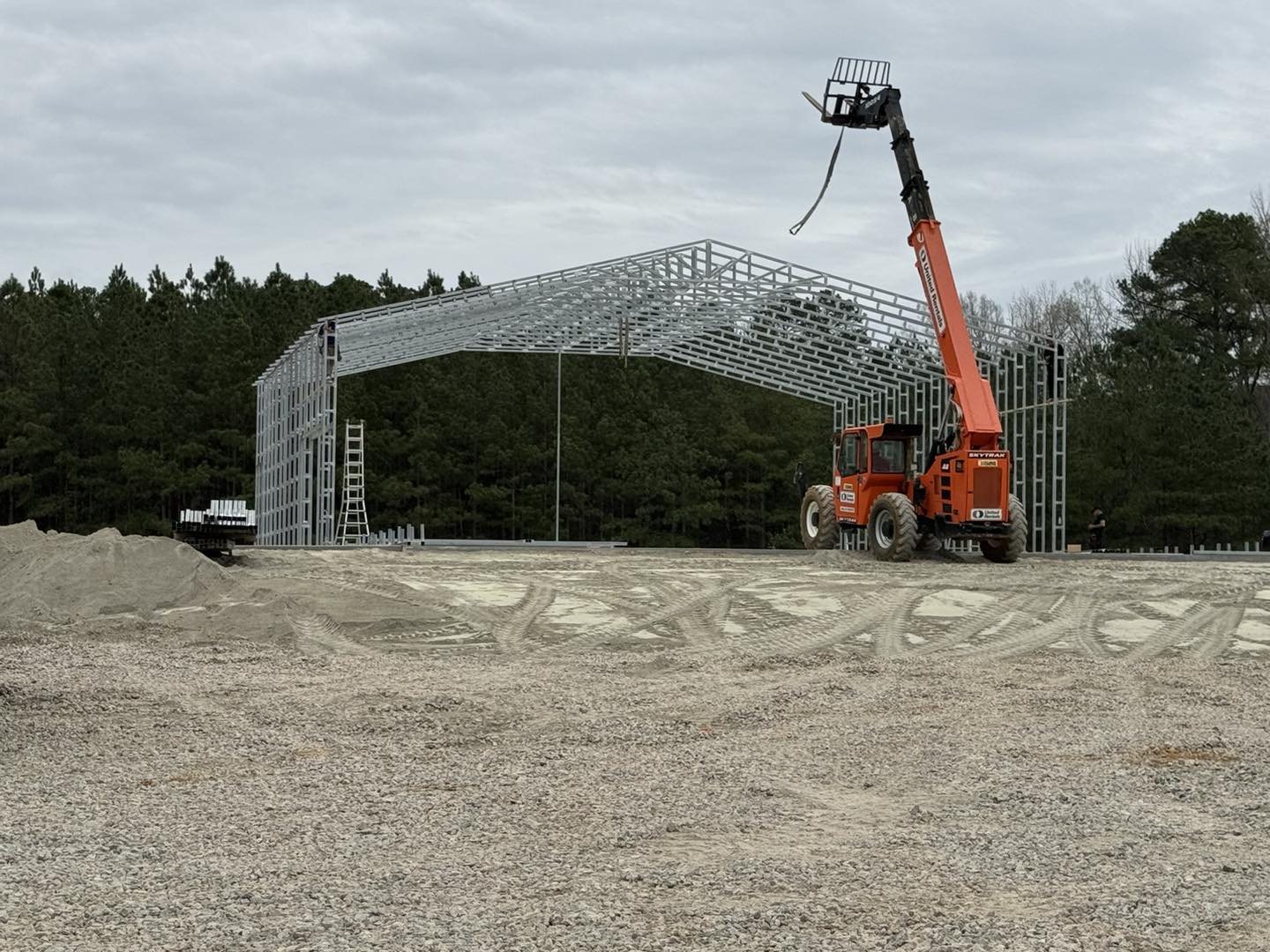
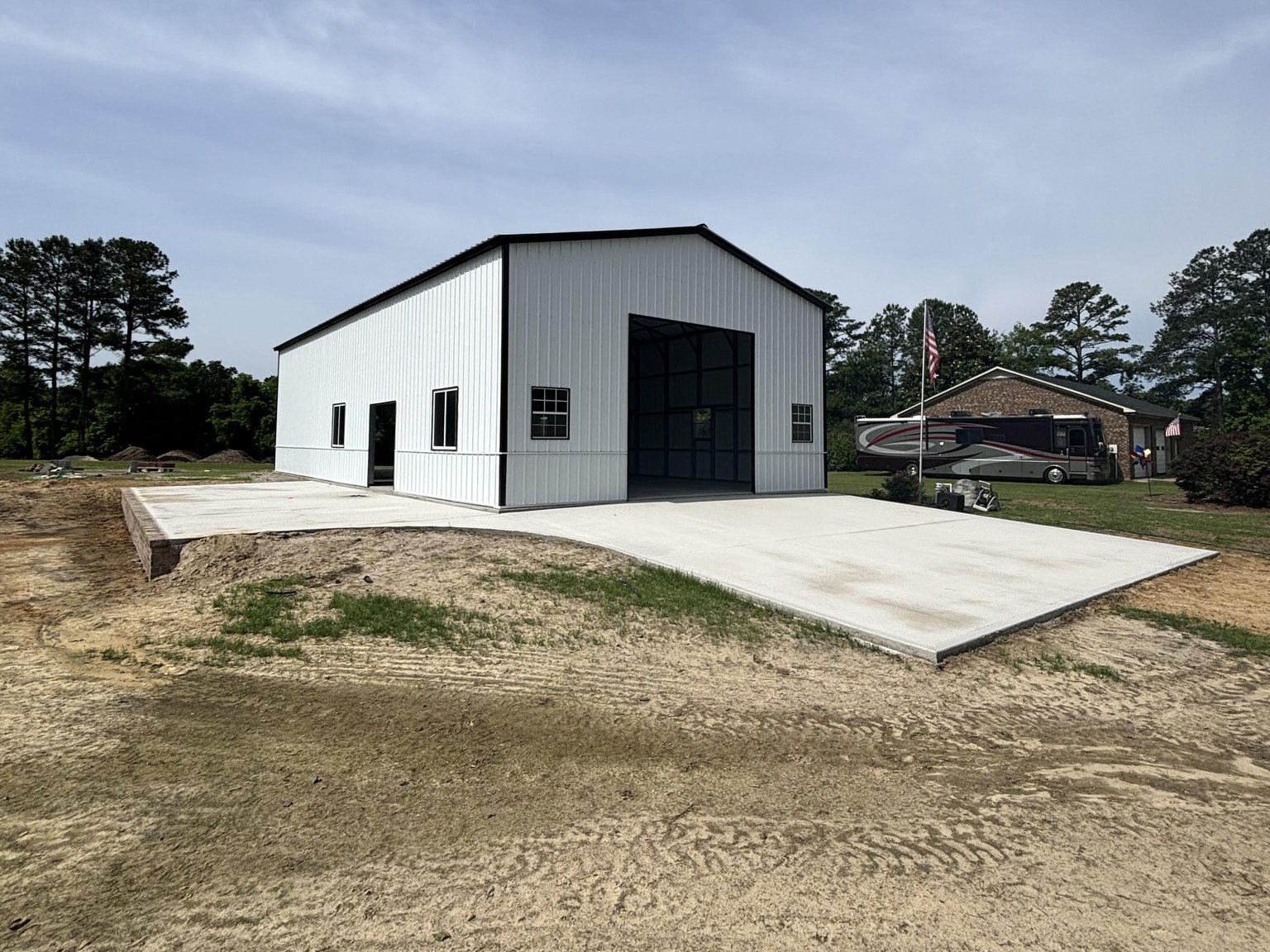
When the seller is also the manufacturer, a single installed price takes care of the steel, the trucking, the labor, and the skill needed to leave the building standing straight, anchored and trimmed after a few days of work. We form our panels at our plant in Farmville, North Carolina, and we deliver and install the building ourselves, so no outside builder is involved. Any site inside 100 miles of one of our 28 lots gets delivery and installation at no charge. If the county requires certified engineered drawings, we supply them, and before you commit we tell you if certification is needed for your site.
Whatever a kit leaves out, an installed shell leaves out too: footings or a slab, electrical work, plumbing and interior finishing are all handled by your own trades. Compare one shell with the other, and track the finish-out on a separate sheet that applies to both.

Kits earn a place in a few situations: a small, open building; an owner who already has the tools and knows helpers with experience; a site too remote or too cramped for a delivery crew; and a preferred supplier that sells kits and nothing else. An open carport on low legs forgives the most mistakes, because no wall panels will catch the wind and no door openings need squaring.
The case for a kit weakens quickly with size. Walls, roll-up doors, a vertical roof or taller legs each add hours and call for more precision, and when an inspector is involved the anchoring and bracing have to match the stamped drawings to the letter. A kit also hands you the schedule. If the weather turns while the building is half built, it sits exposed, whereas an installation crew finishes within days. Judge your own skills and calendar honestly before you decide.

Write one specification and price both options against it: the same width, length and leg height, the same roof style, panel gauge and framing gauge, and the same doors, windows, colors and level of certification.
For the kit, total up the freight to your address, the unloading, any tool you would have to buy, a rented lift, the anchors and the helpers, then add a sensible cushion for ruined material and a second trip to replace a missing part. For the installed building, confirm that delivery and installation are in the price, and whether miles beyond the free radius carry a charge. Then write down what neither quote includes: preparing the site, a slab or a gravel pad, permit fees and interior work.
Find out from each seller how the number was arrived at and for how long it is good, because steel prices change; we price from current steel costs, and our quotes usually arrive within 24 hours. You are finished comparing when both columns describe one and the same building, standing, anchored and trimmed.
A kit can save money, but only when you have the time, the helpers and the tools, and only when the site cooperates. The frame is the delicate part. Getting a steel frame level and square is hardest where the ground is sandy or soft, or where the lot slopes, and it is where most owner-built projects go off the rails. A frame that starts out of square makes every panel afterward harder to fit.
Anchoring is the other half of the work. The right anchor depends on the surface under the building, whether concrete, asphalt or bare soil, and on how high a wind rating your county demands. Along the coast, inspectors check the finished building against the certified drawings, down to the anchors.
If this sounds like too much, we can install the building for you. That takes the risk off your shoulders, and your weekend goes to using the building instead of putting it up.

Begin with what is under your feet. Land east of I-95 is flat, with sandy loam on top of clay and groundwater that may be only a few feet below the surface. Farmland here ranks with the best in the country: no other state produces as many sweet potatoes as North Carolina, and most of them are raised in these counties. Even good ground deserves some planning before concrete is poured.
After a heavy rain, walk the site and look for standing water. Raise the pad rather than excavating, pack the fill in layers, and give the surface a slope so water drains away without help. Sandy soil calls for suitable anchors, and a low lot can be inside a mapped flood zone, which is why the county flood map deserves a look before you settle on a spot. With those details right, a steel building in this part of the state can stay dry inside for decades.
A small open carport can be handled by two people when the air is still. Add enclosed walls, a roll-up door and taller legs and you should plan on three or more, one of whom is at ease working up at roof height. Wind decides it, since unfastened panels act like sails.
Expect to use impact drivers fitted with the right nut-driver bits, shears or snips for cutting metal, and a rivet tool. For layout, bring levels and string lines. A hammer drill handles anchors set in concrete, ladders or scaffold get you to the roof, and taller buildings call for a lift. Wear safety glasses and gloves, because the edges of cut panels are sharp.
It can, provided the county permits owner installation and your anchoring and bracing follow the stamped engineered drawings. Ask the building department which inspections apply and whether owner-built structures are allowed. Most owner-built structures that fail do so because they departed from the drawings.
Usually it is, when you set it beside the bare kit price. A fair comparison, though, adds freight, tools, helpers, rented equipment and your own time to the kit. Where delivery and installation carry no charge, as they do within 100 miles of any ECOP lot, the installed building often comes out cheaper.
Seldom. After the steel arrives, a professional crew needs days to finish the shell, but a kit build stretches over weekends and depends on the weather and on your helpers showing up. If timing matters, ask the installer how soon delivery can happen and weigh that against the time you can commit.
Send us the size, the county the building will stand in and what it has to hold, and we will price it from current steel pricing so you have a real figure to put beside the kit quote. Asking carries no obligation, and if a different size would serve you better, we will tell you.