Widths from 12′ to 24’+
Choose a single, double or triple-wide layout.

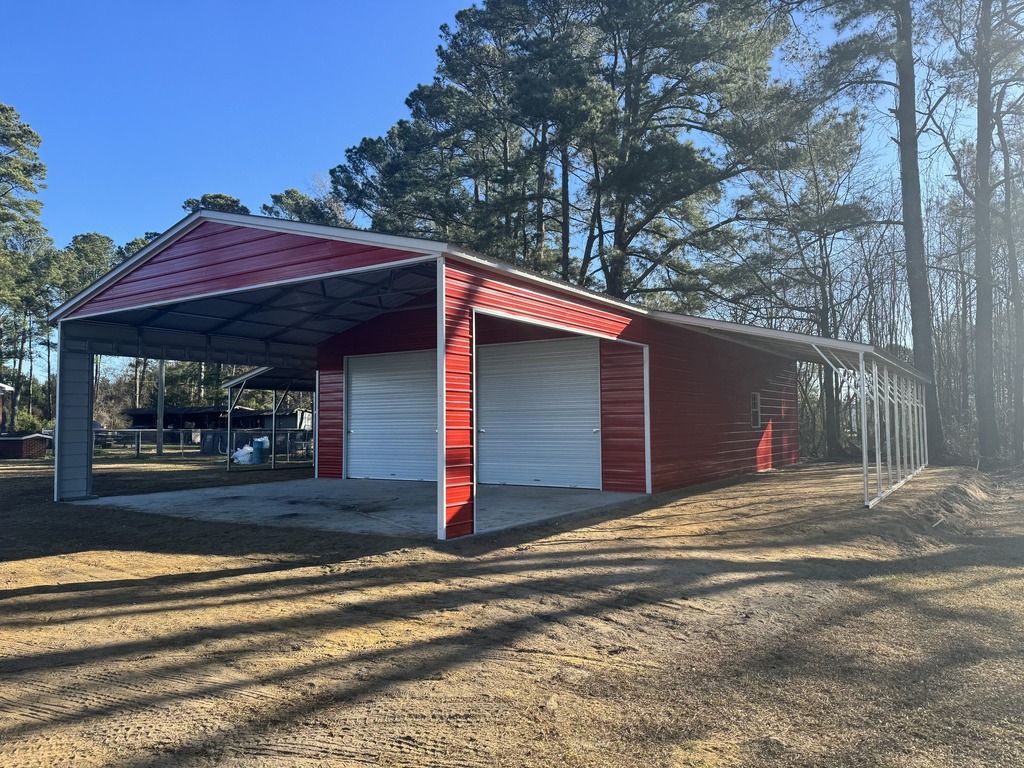
If a car, truck, RV or boat is sitting outdoors, a metal carport is the fastest and cheapest way to get it out of the weather, since sun and hail do real damage to anything left in the open. We make RV covers as well as carports in steel, in single, double and triple-wide sizes, and we deliver and install them at no charge within 100 miles.
Call (252) 414-5105
Get a Free Quote
Choose a single, double or triple-wide layout.
Class A coaches, towers and boats fit under legs that reach 20′.

Delivery and setup cost nothing when the site is within 100 miles.

Carports qualify just as our buildings do, with no credit check.
Anchors for ground, asphalt or concrete are part of the price and sized for your site.
Start with an open frame and add sides and ends when you are ready.

Ultraviolet rays fade the clear coat, and dashboards crack. Hailstorms in the Carolinas regularly total vehicles left outdoors. Of everything we sell, a carport costs the least, and it can pay for itself the first time it spares you an insurance deductible. That, honestly, is what drives most of the carport orders we take.

A 12′ width holds one car and leaves room to walk around it. For two vehicles, 18′ to 20′ will do, though 20′ is the one buyers most often wish they had chosen over 18′. Go to 24′ or more for three vehicles, or for two and a boat. With an RV, include the roof AC unit when you measure its height, then allow another foot. A typical Class A coach needs legs of at least 14′, and misjudging it is the error we run into most often.

The cheapest carport is the fully open one. Gable ends keep out wind-driven rain, and if you close either side, or both, the carport becomes a windbreak, which helps more than you might think on rural sites with little shelter. It is possible to begin with an open frame and ask us to add panels at a later date; because the frame stays the same, none of the original work is wasted.

A carport works as well as the details you settle before ordering, and four of them are worth some thought. Where pine needles and leaves land on the roof, choose a vertical one, which drains them off with the rain. Spend a foot or two on leg height while it is cheap, because that is what lets a pickup with a rack, or a camper of modest size, park under it later. Put panels on the side the weather hits to keep driven rain out. And if you are near the coast, bring up wind certification and anchoring, since an open carport can act like a sail.
Those details answer a short list of troubles. Spring brings a coat of yellow pine pollen. After that, sap and needles drop on whatever is parked beneath the trees, and summer sun can cook a dashboard. Afternoon thunderstorms bring hail. One carport covers all four, and it costs less than any other steel building.
Eastern North Carolina is hit by tropical systems more often than nearly any other part of the East Coast. Floyd (1999), Isabel (2003), Irene (2011), Matthew (2016), Florence (2018) and Dorian (2019) are all still within living memory. Some of them came as wind, but most came as water. The lesson locals drew was that anchoring, and the ground under the building, decide how well it survives.
So we start with questions about the site, long before colors. How close is it to the coast? Between I-95 and the water, the wind speed a building is designed for keeps rising. Is a river or sound nearby? Flood zones follow every one of them. And which county is it in? Its inspector expects a particular level of certification. Once you tell us where the carport will stand, we price the framing, the anchors and the drawings to match.
Of everything we build, carports cost the least. A basic single-car unit with a regular roof is the starting point. Each of these raises the price: more width, taller legs, a vertical roof or enclosure panels. Pricing follows what steel coil costs, so we quote at current prices instead of a printed list. Phone (252) 414-5105 and ask for a same-day figure.
Measure the RV’s height including any roof-mounted AC, and allow at least a foot above that. Class A motorhomes mostly call for 14′ legs, while fifth wheels and travel trailers generally fit under 12′ to 13′. In width, 18′ works and 20′ gives comfortable room. Buyers most often get the height wrong, and it is the costliest mistake to fix.
That depends on your county, and on whether the carport sits on permanent anchors. An open carport is often treated differently from an enclosed garage. We can tell you what your county typically asks for, and certified drawings are available when they are needed.
Yes, as long as it is anchored the right way and certified for the wind where that is required. The anchoring matters more than the steel. We size anchors for your site and soil, and wind-rated certification is available from us in the coastal counties of NC, SC and VA that require it.
Yes. Rebar anchors secure it on level ground, asphalt anchors suit asphalt, and wedge anchors suit concrete. The site has to be reasonably level, and if yours needs prep we will say so before delivery.
Give us the width you want, the county and what the carport needs to cover. We price from current steel costs, the quote carries no obligation, and you will hear it from us if a different size would work out better.