Six things set the price
Roof area, gauge, color, panel length, roof shape and steel coil price.

Metal roof cost is something you can test for yourself, by asking what any figure assumes about your roof. Six things set the price, and the per-square-foot figures posted online pay no attention to most of them. We roll our own panels instead of reselling someone else’s, so we can show what really moves your number. Give us your actual dimensions and we will price them, with materials broken out separately, so you have a number you can compare.
Call (252) 414-5105
Get a Free Quote
Roof area, gauge, color, panel length, roof shape and steel coil price.

Valleys and dormers multiply the trim and the labor.
They average roofs that look nothing like yours.
One materials figure is easier to compare than a bundled total.

The price is real on the day, and the quote states how long it holds.
We roll our own panels, so no distributor margin is added.

Six things set the number. The first is roof area, which nobody will be surprised by. The second is gauge: 26-gauge costs more than 29-gauge. Third is color, since certain pigments are genuinely more expensive to make. Fourth is panel length, which changes handling and freight. Fifth is the shape of the roof, and this is the one most people overlook: valleys, dormers and penetrations multiply the trim and the labor well beyond what square footage alone would predict. Sixth is the price of steel coil, which moves continuously, so no honest seller publishes a fixed rate.

Take a plain gable roof and a cut-up roof of identical area. They are different jobs, because the cut-up one needs several times the trim and a good deal more labor. Roofs also get cheaper per square foot as they grow, since fixed costs are spread over more area. So any published figure is an average of projects that bear little resemblance to yours. Ask instead for one delivered total, worked out from the measurements of your own roof.

We are a manufacturer and supplier, so our figure covers materials only: panels, trim, closures and fasteners. If you hire an installer, labor is a separate charge and usually makes up a large part of the total. A quote that bundles everything is harder to compare, so a separate materials figure is worth having even if you plan to buy the roof installed.

Metal costs more at the start, usually by a wide margin. What you get in return is a roof that lasts several times as long, and the whole argument rests on that. Looking thirty years ahead, in a climate like ours, metal generally comes out on top. Looking five years ahead, it does not. If you expect to sell soon, shingles are the sensible choice, and a roofing supplier who says otherwise is selling, not advising.

Weather is the proving ground for a metal roof, so it is fair to ask what the higher price buys in Eastern North Carolina. Wind is the first test: a correctly fastened metal roof resists uplift far better than aging shingles do, and rain runs off it quickly even in a downpour. Metal also avoids the algae stains that darken shingle roofs in the humid Southeast. Pale colors send back more summer heat than you would expect, and you will feel the difference in a barn or workshop with no air conditioning.
Near the coast, salt is part of the picture. How long a roof stays tight depends on the small parts: the fasteners, the closures where panels meet the eave and ridge, and trim shaped to turn back wind-driven rain. Those count for more than gauge on its own. Hose the salt off about twice a year, and after any named storm look over the fasteners that are exposed.
Plan for condensation too. In spring and fall, warm, wet morning air meets a cool panel and the underside drips. Insulation or a vapor barrier beneath the panels, with ventilation at the ridge and eaves, stops it, and putting them in while the roof goes on costs far less than adding them later.
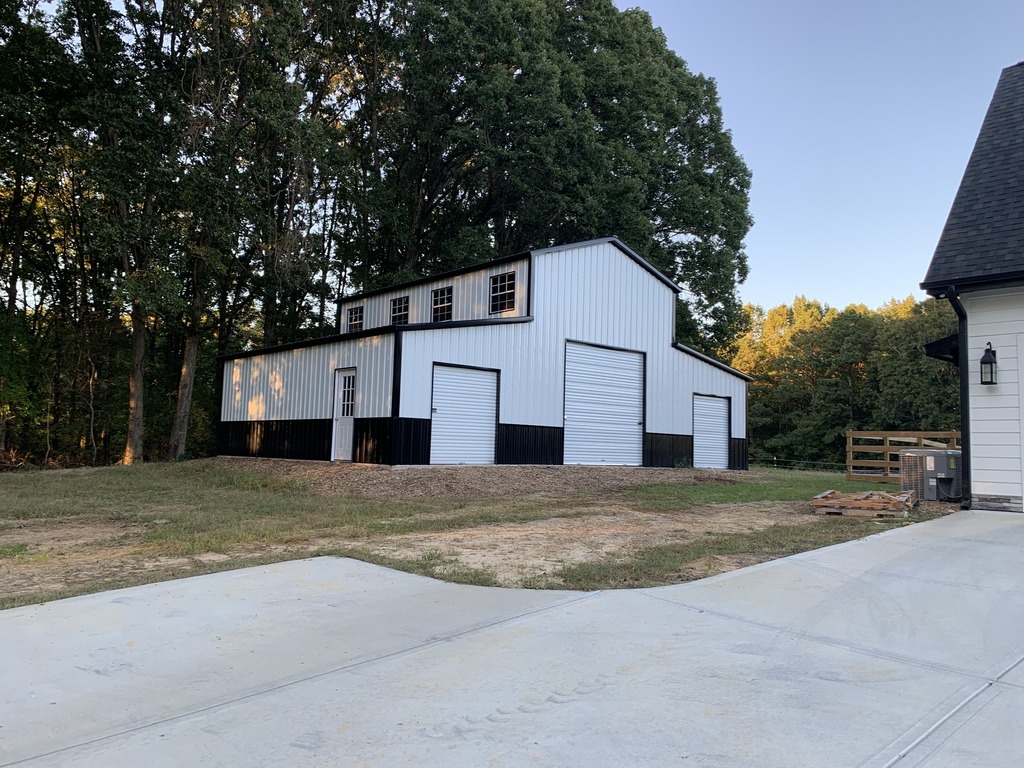
Start with the ground. A building under a metal roof stays dry inside when the groundwork is right, and in Eastern North Carolina that begins with the soil. Land east of I-95 is flat, with topsoil that is mainly sandy loam resting on clay and groundwater often only a few feet below the surface. It is some of the best farmland in the country: no other state grows as many sweet potatoes as North Carolina, and most of that crop comes from these counties. The same ground repays a little planning before a slab goes in.
Visit the site after a hard rain and note where water stands. Raise the pad above the surrounding ground rather than cutting down into it, pack the fill in layers, and slope it so water runs off on its own. Sandy soil needs suitable anchors, and a low spot can fall inside a mapped flood zone, so look up the county flood map before choosing the location. Handle those points and a steel building here should stay dry inside for decades.
The answer turns on the roof area, the gauge, the color and the panel length, but most of all on the shape of the roof. A cut-up roof with valleys and dormers costs far more than a plain gable with the same square footage. We price from today’s steel coil cost, so send your dimensions or call (252) 414-5105 and we will work out a real figure for the materials.
Not a reliable one. Published per-square-foot numbers are averages of projects that may be nothing like yours, and the price per foot shrinks as the roof gets bigger, so the figure is a poor guide for any decision. Ask for a total based on the actual dimensions of your roof.
Not at the start. Metal costs more, often by a wide margin, but it lasts several times longer, and that is the basis of its case. Spread over many years, metal usually comes out ahead. Spread over only a few, it does not. Anyone selling within a few years is better served by shingles.
Panels in 29-gauge and a standard color, on a simple roof shape, picked up instead of delivered and bought directly from a roll-former. That is the lean choice. Go cheaper than that and you are usually getting a thinner gauge, or the quote leaves things out.
Buyers and appraisers generally look on it favorably, especially for the service life it has left, but how much of the cost comes back depends on the market and on what is usual in your neighborhood. For your own area, a local appraiser will give you a better answer than any national figure.
Give us the dimensions of the roof, the county and a sentence on what sits beneath it. The figure we send is based on steel pricing as it stands today, it commits you to nothing, and if another size would serve you better we will tell you.