Panels cut to your run
Every panel is cut to the exact length you need, so nothing has to be lapped to make up the distance and no scrap is left over.

Before you order metal roofing and siding from anyone, ask where the panels are made. Ours are 29-gauge steel, rolled from raw steel coil at the plant we run in Farmville and cut to the exact length of each run on your building. Order everything for the job or a single sheet: there is no minimum, and no distributor markup is built into the price.
When you ask for a price, we quote the full package of panels, trim, closures and screws, so you can set it beside any other quote and compare like with like.
Call (252) 414-5105
Get a Free Quote
Every panel is cut to the exact length you need, so nothing has to be lapped to make up the distance and no scrap is left over.
A single sheet and a full project are priced on the same basis.
The package covers ridge cap, J-channel, and trim for the rake, gable, eave and corners.
Fasteners are sized to your purlin spacing, and foam closures come with them.
Builders and roofers are offered volume pricing.

We roll the panels in our own plant, so an order placed on Tuesday can be collected on Thursday.

Stock panels come in fixed lengths, so somebody has to lap two sheets or trim one down. We work the other way and cut each panel to the full run of your roof, which means a 27′ rafter run gets a 27′ panel. A roof with fewer seams has fewer places for water to get in, and you are not paying for steel that ends up in the scrap pile. On a re-roof or a pole barn, that saving usually outweighs the difference in panel prices from one supplier to the next.

For home roofs and farm siding, 29-gauge is the usual choice and covers what nearly every buyer needs. The thicker 26-gauge pays off on long exposed spans or where hail keeps coming back. Still, the panel is rarely the first thing to give out. Fasteners and closures are. Bargain screws back out, and bargain closures leave gaps where wind-driven rain gets under the ribs. We would sooner sell you the correct screws than the cheapest ones.

A roof takes more than panels. The full list also has ridge cap, trim for the eaves, rakes and gables, J-channel wherever a panel meets a wall, foam closures for the ridge and the eaves, and screws long enough for your purlin spacing. Finding out you are short on closures when half the roof is open and rain is forecast makes for a bad afternoon. Give us your dimensions and we will assemble the complete list.
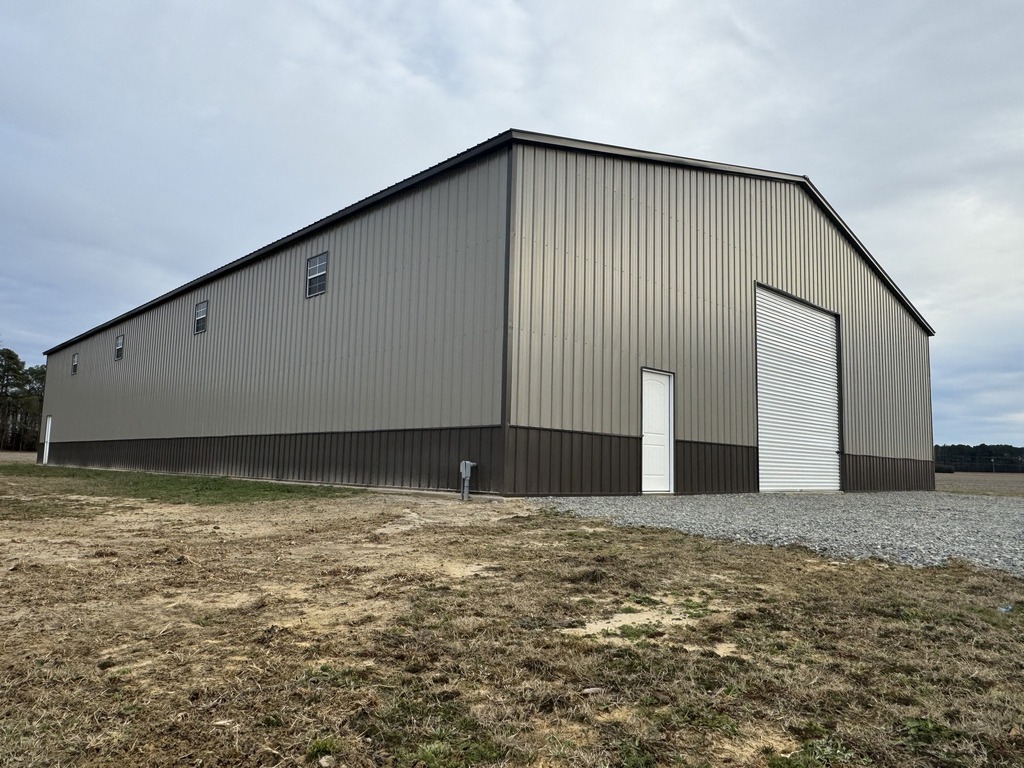
Metal earns its place on a roof in the weather we get here. Panels that are fastened correctly hold down against wind uplift far better than worn shingles, they clear a downpour in a hurry, and they do not streak with the black algae that stains shingle roofs throughout the humid Southeast. Pick a light color and the roof reflects a good share of the summer heat, which shows up as a cooler barn or shop where there is no air conditioning.
Near the coast it is the small parts that decide how a roof ages. Good fasteners, closures along the eaves and the ridge, and trim that stops wind from driving rain under the panels do more for the roof than a thicker gauge would. A couple of rinses a year keep salt off the panels, and any fasteners left exposed deserve a look once a named storm has passed.
Condensation is the other thing to plan for. On cool spring and fall mornings, warm, wet air touches a cold panel and the underside drips. Insulation, or a vapor barrier, under the panels and vents at the ridge and eaves solve that, and it is much cheaper to add when the roof is going on than afterward.
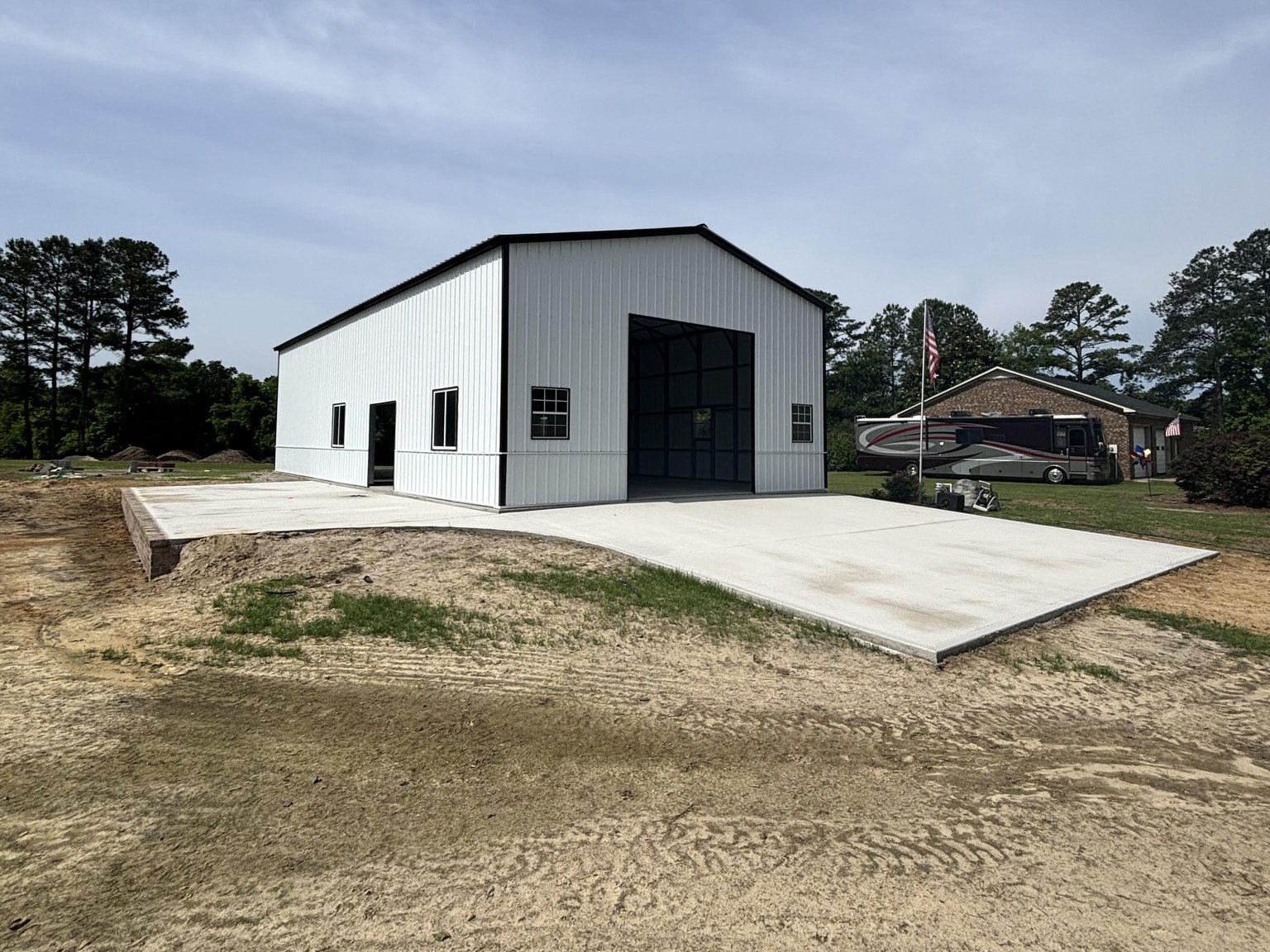
East of I-95 the land is level, and the ground is mostly sandy loam over clay, with groundwater frequently just a few feet below the surface. It makes excellent farmland, and the proof is the sweet potato: North Carolina outproduces every other state, and most of the crop comes from these counties. The same ground rewards some forethought before concrete goes in.
After a hard rain, go to the site and see where water collects. Raise the pad instead of digging down, tamp it layer by layer, and shape the surface so water runs off on its own. Sandy soil needs anchors that suit it. Low ground may be inside a flood zone shown on the county map, so look there before you choose the spot. With those points handled, a steel building here should stay dry inside for decades.
We do not publish one flat rate. Panel prices follow the steel coil market and shift through the year, so we give you the current number. Since we roll-form the panels ourselves, no distributor margin is hiding in it. Send us your roof dimensions and we will price everything the roof needs, panels, trim, closures and screws, which lets you judge any other quote against ours.
On almost every house roof, farm building and pole barn it is, which is why it counts as the industry standard. A heavier 26-gauge makes sense when spans are long and unsupported, when hail is a repeat visitor, or when you would like a wider safety margin. If the upgrade is not worth its price on your building, we will tell you so, and if it is, we will say that too.
Yes, because we set no minimum order. A common visit is someone picking up a few panels to patch a barn roof, and that buyer gets panels cut to length and priced the same way a full project would be.
Screw length is set by what the panels go onto, whether purlins, decking or an old roof, and by how far apart the purlins are. The standard choice is a painted-head screw with a bonded washer, in a color that matches the panels. If you tell us how the roof is framed, we will work out the right screw and the number you need. Running short is the commonest error on DIY jobs.
They can, and builders, roofers and framers are offered volume pricing. A contractor with repeat work can arrange steady pricing and turnaround, which saves re-quoting every job.
Send us the size of the job, your county and what the building will hold. We work from what steel costs on the day you ask, and the quote carries no obligation. We will also let you know if a different size looks like a better fit.