Steel throughout
29-gauge panels on galvanized framing, with nothing to rot and nothing for termites.

Metal utility buildings are best chosen by what they have to hold, not by a catalog number. Inside steel walls, tools stay dry, equipment stays protected and supplies are kept without the maintenance wood needs. Sizes begin near 12’×20′, a compact shed, and extend to a full-scale workshop. The panels are roll-formed in Farmville, and the building goes up at your site with no contractor for the steel.
Short answer
A metal utility building is a smaller steel structure for storage, equipment shelter or farm supplies. We manufacture it in Farmville, NC and install across NC, SC and VA. Sizes start around 12’×20′ and scale up to whatever footprint the job needs.
Call (252) 414-5105
Get a Free Quote
29-gauge panels on galvanized framing, with nothing to rot and nothing for termites.

From a compact shed to a full-size workshop, ordered the same way.

We manufacture, deliver and install, so the steel building needs no separate contractor.

Walk doors, roll-up doors and sliding doors are all available.

Delivery costs nothing within 100 miles of your nearest ECOP lot.

Phone (252) 414-5105, or send in the quote form, for a real number based on current steel coil pricing.

People mean different things by a utility building. A homeowner may want a place for garden equipment and a riding mower. A contractor needs somewhere to keep tools at a job site. A farmer is storing seed, fertilizer and small implements. All three want a steel shell that keeps the weather out and asks for far less upkeep than wood. We can quote one lean-to panel, a small closed-in shed or a bigger equipment cover with open sides, and it all comes from one plant and one crew.

Think of 12’×20′ when the load is one mower, some hand tools and a workbench. For a small tractor and two mowers plus a full wall of shelving, you want 20’×30′. At 30’×40′ you can combine storage with a light shop. What matters is what goes in and how many doors it needs, so we size each building from its job rather than from a catalog entry.
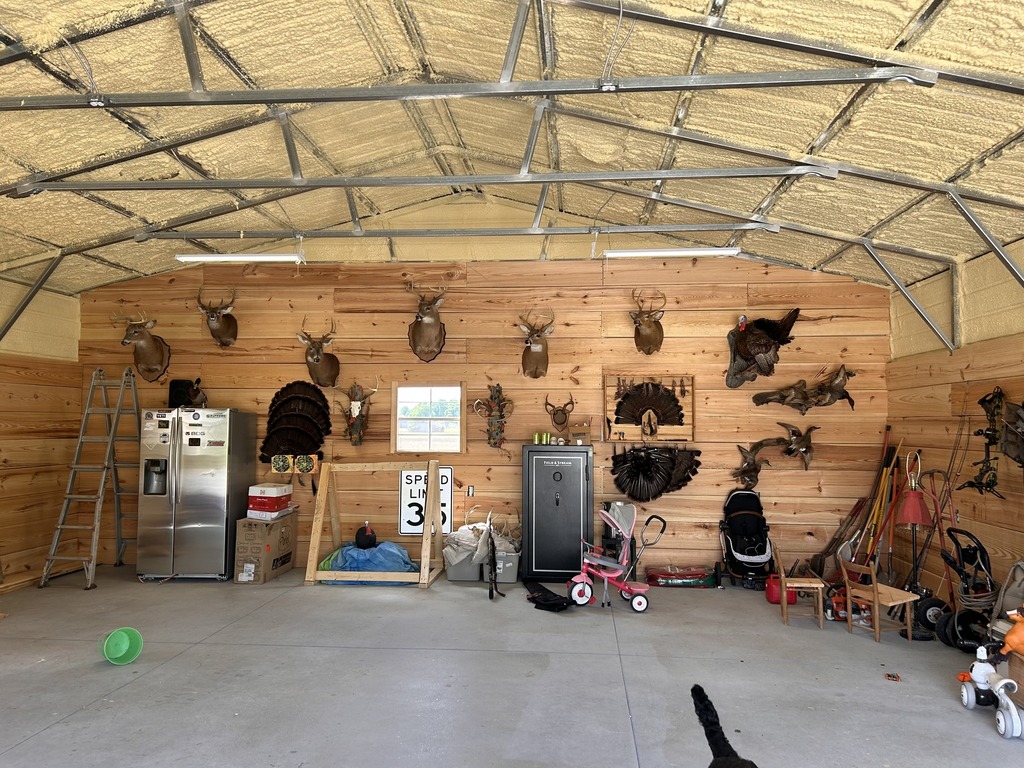
Damp does more harm than weather to things kept in a utility building in the Southeast. Cardboard boxes soften, tools pick up rust and anything made of fabric invites mildew. The steel roof and walls shut out the rain; limiting the humidity inside is the part that takes thought.
Work from the ground up. A concrete floor laid over a vapor barrier, or a raised gravel pad that drains well, stops moisture rising into the building. Openings high on the walls or along the ridge let warm, wet air out. Put what you store on shelves or pallets, and keep it a little way from the wall panels so air can circulate behind it.
Sensitive items need extra care. For paperwork, furniture or electronics, insulate the roof against condensation and think about a small dehumidifier. Lawn equipment, hand tools and seasonal gear need little more than airflow and a dry floor.

Past I-95 heading east, the country is flat. The topsoil is mainly sandy loam resting on clay, and groundwater is frequently just a few feet beneath it. It ranks among the finest farmland in the nation: North Carolina leads the country in sweet potatoes, and most of that crop comes from the counties in this region. The same ground deserves some planning before a slab goes down.
Visit the site after a heavy rain and note where the water collects. Rather than digging down, build the pad up above the ground around it, compact the fill in layers, and slope it so water runs off by itself. Two checks come before the choice of spot: sandy soil calls for suitable anchors, and the county flood map shows whether a low area is a mapped flood zone. Get the site and the pad right and the interior should stay dry for decades.
Widths run from 12′ to 60′. Lengths begin at 20′ and increase in 5′ increments. Most utility jobs fit somewhere between 12’×20′ and 30’×40′. Tell us what you need to store when you call (252) 414-5105 and we will recommend a size.
It varies by county, and one deciding factor is whether the building rests on a permanent foundation. Smaller utility buildings placed on skids or on a gravel pad often come in under the permit threshold, though that is not true everywhere. We can tell you what usually applies where you live; call (252) 414-5105.
Describe the building: how large, which county and what it will store. Our price comes from current steel costs and carries no obligation. If another footprint would fit the use more closely, we will say so.