Maker and installer
Who makes the steel, who puts it up, and whether one company does both.

Picking a metal building contractor comes down to a single decision: whose quote describes a building you can hold the seller to. What questions should you ask a metal building contractor to make that call? Buyers who end up unhappy usually skipped the basics: who actually makes the steel, whether setting it up was included in the price, what sort of slab the crew assumed they would find, and whether anyone obtained the paperwork the county requires. The questions below follow the order in which they come up, starting with your first phone call and ending the day the crew packs up, so that each quote you collect covers the same building and each promise is in writing.
Short answer
Find out who makes the panels and framing, and what gauge and coating they have. Confirm that the price covers delivery and installation. Learn whether your county requires certified engineered drawings and whether the quote includes them. Know what foundation the crew assumes, what the quote leaves out, how your deposit and later payments are staged, and which lien waivers you will receive when the job is finished.
Call (252) 414-5105
Get a Free Quote
Who makes the steel, who puts it up, and whether one company does both.

A single sheet listing the gauge, panels, color and doors, along with how the building is anchored and whether delivery and installation are included.

Ask about the slab, permits, site preparation, interior finishing and hauling beyond the stated radius.

Does your county call for them, and are they already in the price?
The license number, where one is required, and a certificate of insurance, each checked with the office that issued it.

How the deposit is handled, which milestones trigger later payments, when a refund applies, and the lien waiver you receive at completion.
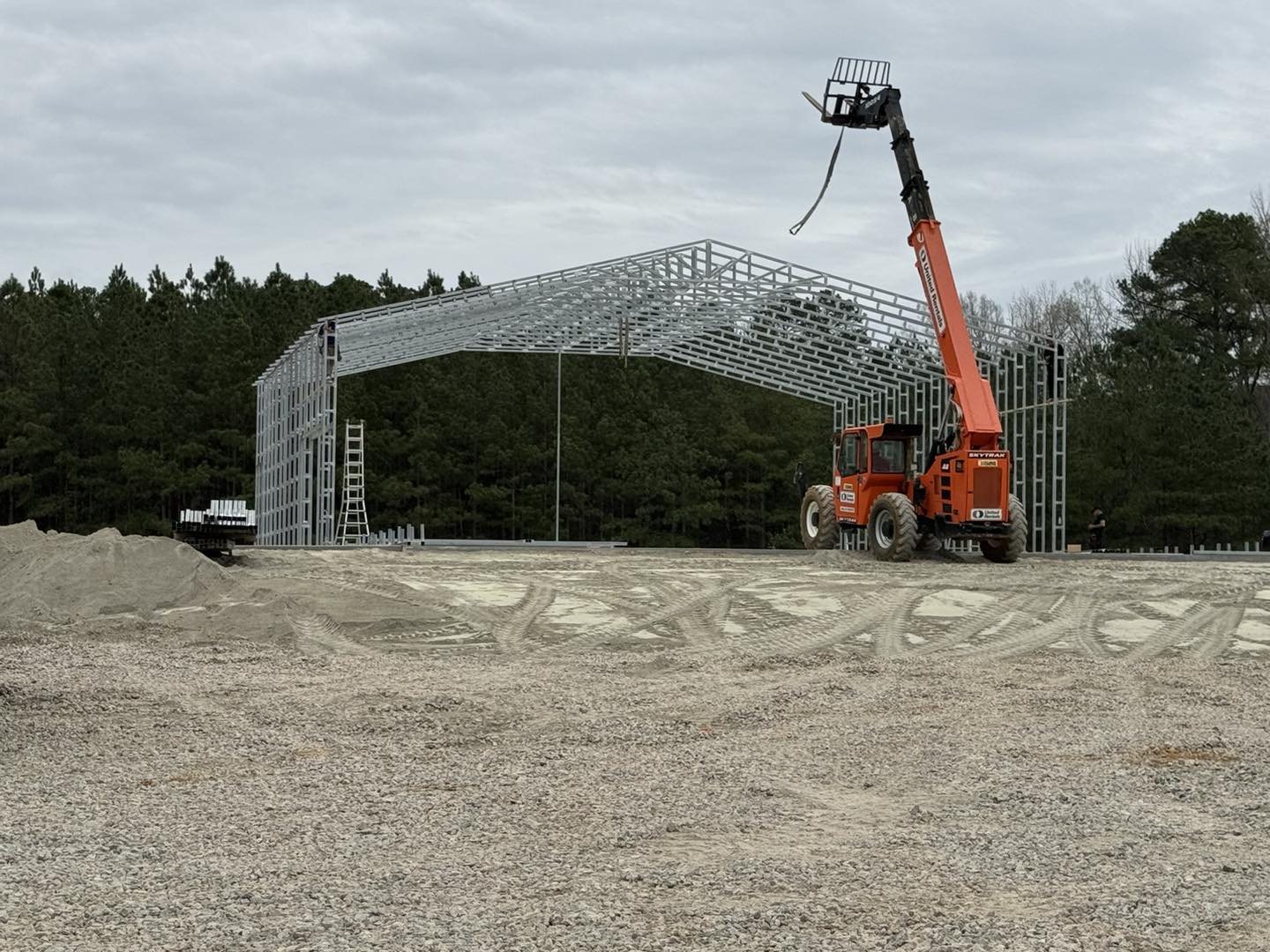
A good share of the companies that sell metal buildings are dealers. They resell a manufacturer’s product and have it erected by a crew that works for someone else. That arrangement is legitimate, but it matters, because it settles who you call if a panel is delivered damaged or the installers never turn up. So ask plainly. Does the company make its own panels and framing, and if not, who does? Does it install with its own people or with a subcontractor? Where is the plant, and can you look at the panels before you buy? When one company makes, delivers and installs, as we do from our Farmville, North Carolina plant, a single name stands behind every step. If the answer is a string of different companies, get each name and find out how a service claim passes from one to the next. Then get every answer written onto the quote, so the whole chain is on paper before any money changes hands.
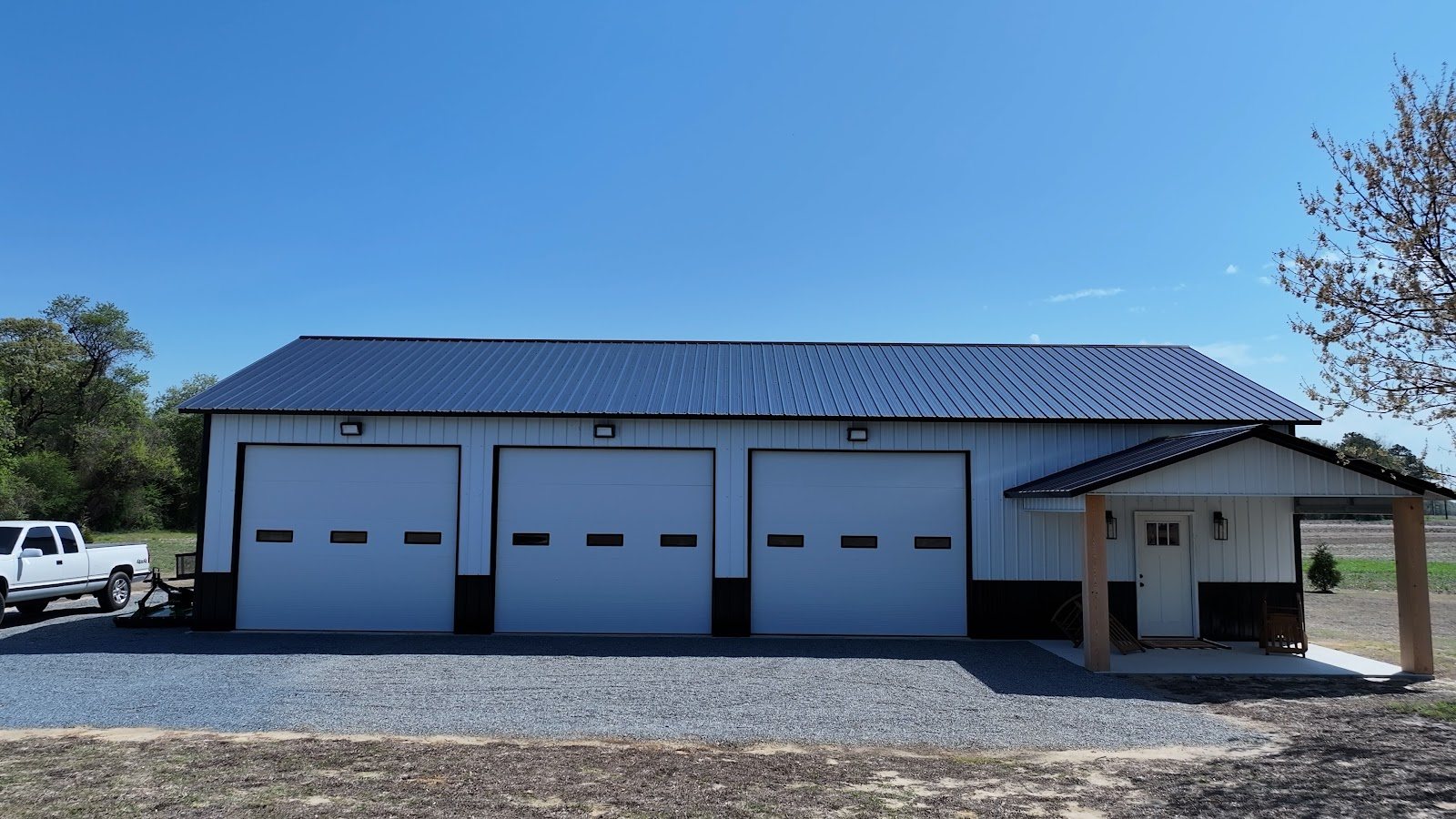
A written scope should name the gauge of the framing and of the panels, the color, the trim, each door and window with its size, the anchoring method, and whether delivery and installation sit inside the total. Then turn the question around: what will you still have to pay for that does not appear on the sheet? Extras that commonly fall outside the number include the pad or concrete slab, site clearing and grading, permit and inspection fees, electrical and interior work, and any hauling past the stated delivery radius. Find out how long the quoted price holds, because steel prices move and a quote built on current pricing will not stay good forever. Ask how a change order would be priced if you added a door after ordering. Finally, check what the figure assumes about your site: if it presumes a level pad and a way in for the truck, find out how the schedule and the cost shift when the installers show up and the pad is still unfinished.

Virginia, North Carolina and South Carolina counties do not all treat this the same way. Some require certified engineered drawings that show how a permitted building is designed for wind and snow loads, and some do not; the rule can also depend on whether the structure is a home, a garage or a building for farm use. Find out if the contractor already knows your county’s position, will verify it before you commit, and treats the drawings as part of the price or as an extra line. Establish who obtains the building permit, and who arranges the inspections. A certified building that sits on the wrong kind of slab may not pass inspection, so learn which foundation the drawings assume. If the contractor cannot explain how certification works where you live, call the county inspections office yourself before you sign. One who tells you up front whether your site needs certification is sparing you a rejected permit down the road.

Begin with the size of the deposit and when the remainder is due, then see whether any of the payments depend on a milestone like delivery or completed installation instead of a calendar date. Find out whether you would get the deposit back if the county turned down the permit or certification altered the price. Where your state requires a license, get the number; either way, get a current certificate of insurance showing general liability and workers’ compensation cover, and confirm both with the issuing offices rather than accepting the documents as presented. You should also find out whether the installer and any subcontractor will hand you a lien waiver after the last payment clears. If you are considering rent-to-own, read the entire agreement first, paying attention to the buyout terms and to what a missed payment triggers. None of this is confrontational. Anyone who builds regularly should have those answers on hand.

Learn how far ahead you will be told the delivery date, how long the crew plans to be there, and what they require of you: a level pad, a clear route for the truck, and someone on hand to confirm where the doors go. Find out how the building gets fastened down, whether to your slab or to bare ground, and whether the anchors are in the price. Ask what the crew does when weather interrupts the job midway. At the end, walk the building with the crew and inspect the panel alignment, the trim, the doors, the screws and the sealant, and find out whom to phone during the first month if something comes loose. Ask whether the crew takes its scrap and packaging away with it. Before they leave, make sure you are handed the paperwork: a copy of the signed scope, engineered drawings if there are any, the record of the permit and inspections, and a receipt showing the final payment. Keep that folder, because lenders, insurers and later buyers are the ones who will ask for it.

After any big storm in the Carolinas or Virginia, crews from out of town start knocking on doors. Some of them do good work. Others collect a deposit and are gone long before the first panel is delivered. That is a strong reason to buy from a company that keeps a real lot open to visitors and has someone to answer the phone.
A short list of questions separates the serious outfits from the rest. Ask who manufactures the steel and where the plant is, who installs it, whether you will receive certified drawings for your county, whether the written price states what it covers (delivery, installation and anchors among them), and whether you can see a finished building close to home.
Nothing here is particular to us. It is simply what we would want to know if we were the one buying. Clear answers to every one are a good sign, whichever company you choose.

Before you pick a color, sort out the paperwork. Ask your county what permit and what certification the inspector will expect for your building, and look up the flood map for your parcel. Flood zones trace every river and sound in this part of the state, and the design wind speed climbs the closer you get to the coast from I-95.
We build for the place where we live, and it has had plenty of tropical weather. Dorian in 2019, Florence in 2018, Matthew in 2016, Irene in 2011, Isabel in 2003 and Floyd in 1999 are storms people still remember. A few of them brought wind, but most brought water, and people here learned that a building depends on how well it is anchored and what it sits on.
That is why we want to hear about the site before we get to colors. Give us the location and our quote will cover the framing, the anchoring and the drawings that location calls for.
Yes, and choose recent jobs close to your county rather than a curated shortlist. Drive by one if possible and study the trim lines, the panel alignment and how the building meets its slab. Contractors with a lot of finished work nearby generally keep a sales lot open for visitors.
Do not sign until that gap is closed. Without the manufacturer’s name you cannot tell whose product you are buying or where a defect claim would go. Put the question to them again in writing, and if the reply is still evasive, move on to a company that makes and installs its own buildings.
Deposits are common, and the amount, the refund terms and the due date should all be written into the agreement. Ask if the money is refundable should the permit be denied, and whether the remainder falls due on delivery or only once the installation is complete and has been inspected. Payments tied to milestones are the safer structure.
The answer differs from one contractor and one county to the next, so ask directly, and also ask who books the inspections. If the permit is yours to obtain, request the drawings and specifications the county expects from the contractor. Whoever applies, confirm before you order whether your parcel requires certified engineered drawings, since they alter what has to be filed.
When a company prices from current steel costs, it can normally put a written quote together within a day, provided it knows the size, leg height, doors and site. We usually respond within 24 hours, whether the request starts in our 3D designer or at any of our lots. A longer wait is worth asking about.
Give us the size, the county and what the building will hold, and a quote will follow within 24 hours. It is based on current steel costs, it carries no obligation, and if another size fits your needs more closely, we will point it out.